When choosing heavy duty ramps for cars, aim for models with high weight capacity, stable construction, and clear safety features. This guide highlights five durable options suited for professional garages and serious DIYers. Each product section explains who it’s best for, why it was selected, and any notable limitations to consider. The top picks balance load capacity, ease of use, and reliability across a range of vehicles from sedans to light trucks.
Buyer’s quick summary table:
| Product | Best For | Key Note | Capacity |
|---|---|---|---|
| MaxxHaul 50947 | Heavy-duty home shops and stackable ramp users | Stackable design for versatile height | 6500 lbs per pair |
| Ironton 12000 Lb GVW | Full-size trucks, SUVs, and vans | High load with non-slip tread | 12,000 lbs per pair |
| VEVOR Aluminum Ramps | Lightweight yet sturdy aluminum option | Aluminum construction with safety features | 6000 lbs |
| Garvee 8 in Lift Solid Steel | Professional-grade steel ramps | Robust steel, solid traction | 8,000 lbs per pair |
| TOWKING Car Ramps | Oil changes and frequent undercarriage work | Very high total pair capacity | 16,000 lbs per pair |
MaxxHaul 50947 Lift Stackable Vehicle Car Ramp

Best for: Shop owners and DIYers needing flexible ramp height. This stackable design offers a high total capacity of 6500 lbs per pair, making it suitable for many practical tasks under larger vehicles.
Why selected: The polypropylene construction delivers durability while remaining manageable in weight. The patented stackable design provides versatility for different jack heights and access needs.
Limitation: Not ideal for extremely uneven surfaces without proper setup, and weight distribution should follow the manufacturer’s guidance to maintain stability.
Ironton Car Ramps 12000 Lb GVW

Best for: Vehicles with higher weight demands, including full-size trucks, SUVs, and vans. The pair supports up to 12,000 lbs total, with 6,000 lbs per ramp, making it a solid choice for heavy-duty maintenance.
Why selected: High GVW capacity and non-skid tread provide reliable traction and stability during lifting and loading. Lightweight enough for practical handling yet rugged for repeated use.
Limitation: The 12,000 LB total capacity is impressive, but ensure your vehicle’s weight distribution and surface condition meet the ramp’s safety requirements.
VEVOR Aluminum Ramps, 6000 Lbs

Best for: Users who want a lighter, corrosion-resistant ramp option without sacrificing strength. Ideal for motorcycles, ATVs, and smaller heavy payloads on a budget-friendly aluminum frame.
Why selected: Aluminum construction reduces weight while maintaining a strong load capacity. Features like non-slip rungs and safety straps help keep vehicles steady during loading.
Limitation: Aluminum ramps may not be as rigid as steel under extreme loads; verify compatibility with your vehicle’s weight and the surface you’ll use them on.
Garvee 8 in Lift Solid Steel Car Ramp (Red)
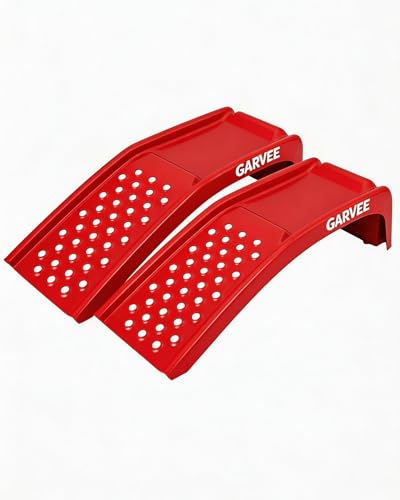
Best for: Professional shops and DIYers needing maximum stability and durability for frequent heavy lifting. The composite steel ramps provide robust support for demanding tasks.
Why selected: Premium steel construction with powder coating offers strong load-bearing capacity and corrosion resistance. Traction features enhance safety during loading and under-vehicle work.
Limitation: Heavier to handle compared with aluminum ramps; plan for secure storage and safe handling when not in use.
TOWKING Car Ramps for Oil Changes
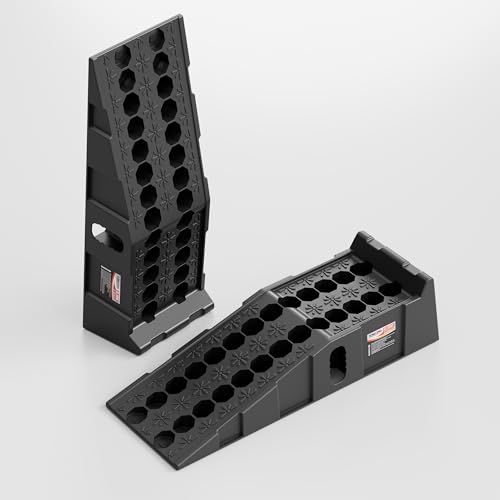
Best for: High-capacity, frequent undercarriage work, including oil changes in automotive shops or home garages with frequent maintenance tasks.
Why selected: The pair covers up to 16,000 lbs total capacity, offering substantial load handling for various vehicles. The 7.1-inch lift height provides extra clearance for oil changes and inspections.
Limitation: The high total capacity indicates heavy-duty use; ensure you have adequate space and ramp placement to maintain stability.
Buying Guide
Key considerations when choosing heavy duty ramps for cars:
- Weight capacity: Match the ramp pair’s total and per-ramp capacity to your heaviest intended vehicle. Overshooting is safer than undersizing.
- Construction material: Steel ramps offer maximum durability; aluminum ramps save weight and resist corrosion; polypropylene or composite ramps can provide a balance of cost and strength.
- Surface and safety features: Look for non-slip treads, traction holes, textured surfaces, and anti-slip bases or rubber feet to reduce slipping while loading.
- Lift height: Higher lift heights provide more undercarriage clearance but may require more space and careful alignment. Consider your typical maintenance tasks and vehicle ground clearance.
- Portability and storage: Heavier steel ramps offer durability but are harder to move. Aluminum ramps or stackable designs can improve portability.
- Compatibility: Ensure the ramps’ top width and incline match your vehicle tires and wheelbase. Some ramps are optimized for motorcycles and ATVs; others for full-size cars and trucks.
- Surface use: Evaluate whether you’ll use ramps on concrete, asphalt, or uneven ground. Non-skid surfaces and built-in safety features mitigate risk on different surfaces.
Frequently Asked Questions
- What is the best ramp material for heavy-duty use?
– Steel offers maximum strength and durability for frequent, high-weight tasks, while aluminum provides a lighter option with good strength and corrosion resistance. - Are high-capacity ramps safer for big vehicles?
– Higher capacity reduces risk of failure under load, but you must still use proper technique, secure footing, and follow weight ratings. - Can ramp height affect maintenance tasks?
– Yes. More lift height allows deeper work under the vehicle but requires more space and careful alignment at the ramp lip. - Should I choose stackable ramps?
– Stackable designs provide adjustable height options, useful for different jack heights and access needs, but ensure stability for each configuration. - What safety features are most important?
– Non-slip surfaces, secure base feet, proper edge design, and reliable locking mechanisms across any ramp type improve safety during loading and undercarriage work. - Is a high-capacity ramp necessary for all cars?
– Not always; match the ramp rating to your heaviest vehicle. For lighter cars, mid-range ramps with solid traction often suffice.