Answering the search for high HP electric motors, this guide compares five strong options that deliver notable torque and speed gains. Best for off-roaders, fleet operators, and enthusiasts who want more power from golf carts or single-phase and three-phase electric motors for custom builds. Each option is evaluated for workability, torque, and suitability to different power needs.
| Product | Voltage / Frame | Power / Torque | Best For |
|---|---|---|---|
| High Performance Golf Cart Motors – Club Car DS Motor | 36/48V, Stock 10 Tooth | 19 MPH, +10% Torque | Club Car users needing more torque on hills |
| EZGO Motor (Regen) – 170-502-0001 | 36/48V, Regen capable | 14 MPH, +40% Torque | Lifted carts or hill terrain with Regen benefit |
| VEVOR 3 HP Electric Motor – 184T | 230V, 56 frame | 12 N.m Torque | Higher horsepower AC motor for shop or equipment use |
| VEVOR 1 HP Electric Motor – 56 Frame | 115/230V, 56 frame | 4.1 N.m Torque | Compact, versatile single-phase motor applications |
| mitoharet 1 HP Electric Motor – 56 Frame | 115V/230V, 56 frame | 1725 RPM, 1 HP | Agricultural/farm equipment and general purpose use |
Note: All products listed are described by their manufacturers or sellers. Consider your voltage, mounting, shaft size, and rotation direction when selecting a motor for a specific project.
High Performance Club Car DS Motor – 170-002-0002

Product overview: This Club Car golf cart motor is a 36/48-volt option designed for ONLY Series carts. It delivers 19 mph with 10% more torque versus stock and is an economical way to gain speed and hill-climbing ability. Best for moderate hills and on-road use where extra torque matters without changing the overall cart configuration.
- Best for: Club Car owners seeking modest speed gains and improved torque on hills.
- Selected because it directly replaces several OEM numbers and keeps common 10-tooth spline compatibility.
- Limitations: Replaces OEM parts; fabrication or compatibility checks may be needed for non-Club Car applications.
EZGO Regen Golf Cart Motor – 170-502-0001

Product overview: This motor is designed for EZGO and Yamaha regen golf carts, delivering 14 mph with 40% more torque than stock. It is optimized for lift kits and larger tires, and can be effective on hilly terrain with proper cart configuration.
- Best for: Carts with lift kits, larger tires, or backseat configurations requiring more torque and regen capability.
- Selected because it fits 36/48V systems and supports regenerative braking features for energy recovery benefits.
- Limitations: May require fabrication work to fit into Yamaha models; verify spline compatibility before purchase.
VEVOR 3 HP Electric Motor – 184T Frame
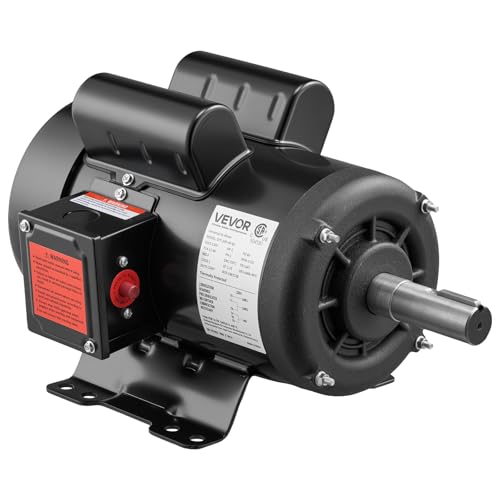
Product overview: A 3 HP single-phase motor rated for 230V, 60Hz, with 12 N.m of torque. It uses a 184T frame and includes a robust 1.125-inch shaft and 2.75-inch shaft length. It supports CW/CCW rotation for flexible installation in a range of equipment.
- Best for: Applications needing substantial torque in single-phase arrangements, such as air compressors or workshop machinery.
- Selected because of higher horsepower output and a sturdy 184T frame for demanding tasks.
- Limitations: Requires appropriate electrical supply and mounting space; not intended for standard 56-frame carts.
VEVOR 1 HP Electric Motor – 56 Frame

Product overview: This 1 HP single-phase motor operates at 1725 RPM with 4.1 N.m torque. It features a 56 frame, 5/8-inch shaft diameter, and CW/CCW rotation. It is designed for versatile workshop use and easy integration into various small machines.
- Best for: Small machinery upgrades, fans, pumps, or light-duty equipment requiring reliable single-phase power.
- Selected because of its compact frame and straightforward reversible wiring.
- Limitations: Lower horsepower means it may not deliver high-speed performance in demanding setups.
mitoharet 1 HP Electric Motor – Farm Duty

Product overview: A 1 HP single-phase motor designed for agricultural equipment and farm duty. It runs at 1725 RPM, supports 115V/230V, and uses a 56-frame housing with adequate heat dissipation features to maintain performance in extended use.
- Best for: Agricultural tasks or tooling requiring reliable single-phase operation in a farm environment.
- Selected because of robust construction and compatibility with common farm electrical setups.
- Limitations: Not optimized for high-speed motion; best suited for steady, moderate torque needs.
Buying Guide: High HP Electric Motors For Cars, Carts, And Equipment
- Horsepower vs. torque: Higher HP improves top speed, while torque affects acceleration and hillside performance. Match the motor to your needs: more torque for hills, more HP for faster top speeds.
- Voltage and frame compatibility: Ensure the motor matches your system voltage (36/48V, 115V/230V, etc.) and mounting frame (56, 184T, etc.) to fit existing hardware.
- Rotation direction: Reversible CW/CCW is useful for versatile installations. Confirm wiring compatibility with your controller and gear setup.
- Application fit: Golf cart motors are tuned for wheel torque and speed; shop motors designed for compressors or machinery when upgrading non-vehicle equipment.
- Installation considerations: Check spline compatibility (e.g., 19-tooth) and potential need for fabrication, mounting brackets, or alignment shims.
- Heat management: Higher horsepower motors can generate more heat. Ensure adequate cooling, especially for continuous operation in hot environments.
FAQ: High HP Electric Motors
- Q: Do high HP golf cart motors require special controllers?
A: Yes, ensure the controller supports the motor’s voltage and current requirements and matches the cart’s electrical system. - Q: Can I use a 230V motor in a standard 120V shop outlet?
A: No. A 230V motor requires a compatible power supply and wiring; consult a licensed electrician for installation. - Q: Is more torque always better for hills?
A: Generally yes, but excessive torque without appropriate gearing or traction can cause wheel slip or drivetrain stress. - Q: What maintenance do high HP electric motors need?
A: Regular inspection of mounting, shaft alignment, belts (if any), lubrication points, and cooling pathways is advised. - Q: Are these motors compatible with all brands?
A: Brand compatibility varies; verify OEM replacement numbers and spline size before purchase. - Q: How do I determine the right horsepower for my application?
A: Consider load, speed requirement, terrain, and existing drivetrain efficiency to select a motor with adequate torque and RPM.