Looking for dependable vehicle hoists and recovery tools in one guide? This article highlights five top options that balance durability, performance, and value. Each choice is best for specific user types—professional shops, off-road enthusiasts, DIY homeowners, and fleet operators—so you can pick the right tool for your needs. Below is a quick summary table of the featured products.
| Product | Best For | Why Selected |
|---|---|---|
| TR Industrial Portable 4-Ton Dual Gear Power Puller | Off-road recovery and mobile work | High pulling power in a compact, weather-resistant frame with dual gears for even force distribution. |
| Kivomot 2-Pack 3″×26ft Lifting Sling | Heavy-duty lifting and rigging | Long reach and durable polyester webbing with versatile end configurations. |
| DNA Motoring Low Profile Hydraulic Trolley Jack | Garage service and small to mid-size vehicles | Low-profile design with overload protection and easy positioning for tight spaces. |
| Portable Electric Hoist Winch (12V, Vehicle Recovery) | Compact recovery setups | Compact, easy-to-use winch for self-rescue and off-road scenarios. |
| MSHOSAC Heavy Duty Manual Crank Winch | Manual pulling with robust construction | Industrial-grade cable and jam-free dual-arm design for reliable operation. |
Summary notes: This lineup covers mechanical pullers, slings, hydraulic jacks, and winches. Each product has a distinct use case—from portable recovery gear to garage lifting—allowing you to select equipment that matches your job size, environment, and space constraints.
TR Industrial Portable 4-Ton Dual Gear Power Puller

This 4-ton (8,000 lb) puller delivers strong pulling power with a lightweight frame under 10 lbs. It features an all-steel construction with a weather-resistant galvanized finish and a dual gear, dual locking pawl system for even, controlled pulls. A 1/4 inch aircraft-grade braided steel cable and robust hooks with safety latches support tougher jobs. Best for off-road vehicle recovery, loading heavy loads onto trailers, and pulling fences or stumps. Consider this for mobile operations where weight and durability matter. Caution: ensure proper cable maintenance and avoid exceeding rated load limits.
Who it’s best for: mobile technicians, off-road recovery crews, and small shop owners who need portable, high-capacity pulling power without a bulky unit. Why selected: combination of high capacity, portability, and weather resistance supports reliable field pulls.
Limitations: compact design may limit long-span pulling; ensure the cable and hooks are intact before every use.
Kivomot 2-Pack 3″×26ft Lifting Sling
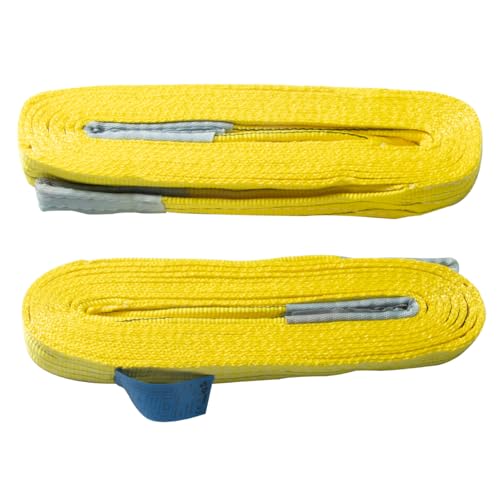
This pair of 26-foot lifting slings is built for larger or elevated loads, rated for 6600 lbs with a 5:1 safety factor. The polyester webbing provides UV and water resistance with minimal stretch, while twisted eye ends add strength for multiple rigging configurations. Best for vehicle recovery, marine mooring, and lifting heavy objects where reach and stability matter. Choose this if you need long, flexible slings for varied rigging setups. Limitation: not a substitute for live-load lifting in all scenarios; inspect for wear and replace if frayed.
Who it’s best for: recovery teams, marine operations, and construction crews needing long, versatile lift slings. Why selected: long length, high WLL, and durable material support a wide range of rigging tasks.
DNA Motoring Low Profile Hydraulic Trolley Service/Floor Jack

This 2-ton hydraulic trolley jack offers a low lifting height (5.1 inches minimum) and a maximum lift of 13 inches, with overloading protection and stable saddle design. Built from heavy-duty steel and equipped with swivel casters for easy maneuverability, it supports servicing most cars and light trucks. Best for garage use where space is tight and quick positioning matters. Choose this for a compact jack that performs in tight spots. Caution: not recommended for larger pickups or SUVs due to weight and height limits.
Portable Electric Hoist Winch for Vehicle Self-Rescue
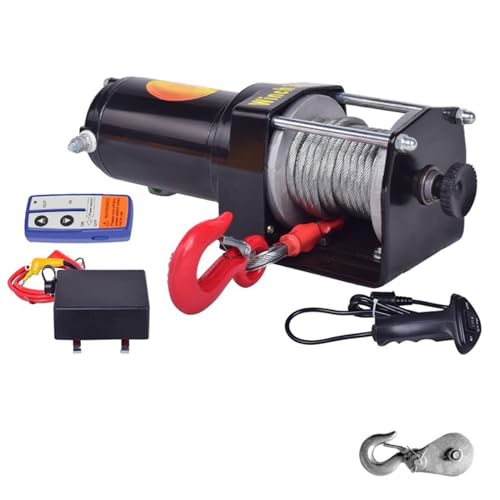
This 12V winch focuses on vehicle self-rescue and off-road recovery in a compact design. It’s positioned as a lightweight option for outdoor use and trucks or SUVs, providing practical lifting capabilities in tight spaces. Best for small recovery setups and quick deployments. Consider this if you need a portable power-assisted pull without a bulky setup. Limitation: the listing emphasizes basic components and general use; verify compatibility with your vehicle’s electrical system before purchase.
Portable Electric Hoist Winch For Versatile Lifting

This portable winch bundle emphasizes a versatile approach for vehicle self-rescue and off-road lifting in compact designs. It includes a galvanized link rod and durable wire rope for anti-rotation and break resistance. Best for users who need a compact, multi-purpose winch for a variety of outdoor projects. Caution: the feature list focuses on components rather than a complete performance profile; confirm load limits align with your intended tasks.
Portable Electric Hoist Winch For Trucks And SUVs
This model targets trucks and SUVs with a compact lifting profile and 12V power. Built to support off-road adventures and field servicing, it emphasizes dependable power and compact form. Best for drivers needing a lightweight, ready-to-use winch. Limitation: the supplied features described are general; verify mounting options and installation requirements for your vehicle before purchasing.
Buying Guide: Key Considerations For Vehicle Lifting And Recovery
- Intended use and environment: Will you tow, recover, or perform on-vehicle lifting? Choose tools designed for the primary scenario—off-road recovery, garage service, or construction rigging.
- Load capacity and safety: Match rated load to expected tasks. Consider gear systems (dual gears, safety factors) and redundancy features like safety latches or overload valves.
- Portability vs. capacity: Lighter devices are easier to handle in the field; higher capacities require sturdier frames. Balance weight, size, and power needs with your workspace.
- Durability and materials: Look for weather-resistant finishes (galvanized, powder-coated) and heavy-duty steel or reinforced polyester components for longevity in harsh conditions.
- Configuration versatility: Slings, hooks, and various rigging configurations expand usage—from vertical lifts to choker and basket configurations.
- Maintenance and inspection: Regularly inspect cables, hooks, and links for wear, fraying, or corrosion. Replace worn parts to maintain safe operation.
- Power source and compatibility: For electric winches, verify battery or vehicle electrical compatibility and ensure proper wiring and mounting.
Frequently Asked Questions
- What defines a “high quality” vehicle hoist or puller?
– Durable construction, load-rated components, weather resistance, and reliable safety features are key indicators. - Is a manual winch safer than a hydraulic jack for lifting?
– Both have safety considerations; manual devices offer simplicity and reliability in simple lifts, while hydraulic systems provide smoother operation for heavier loads. - Can I use lifting slings for vehicle recovery alone?
– Slings are part of rigging systems and should be used with appropriate winches or hoists. They enable versatile configurations but require compatible hardware and safety measures. - What should I inspect before using a puller or winch?
– Check cables for fraying, hooks for secure latches, frame integrity, and verify safety devices are present and functional. - How do I choose between electric and manual options?
– Electric options offer quicker operation and less physical effort, while manual devices are robust and simpler in resource-limited environments. - Are these tools suitable for professional shops?
– Yes, several models are designed for heavy-duty use and fleet-level tasks, though selection should match shop workload and space constraints.