Answer: These inline fuel shut off solenoids provide fast, reliable valve actuation for 12V fuel, gas, and oil lines. They are best for automotive, lawn equipment, and small machinery where quick shutoff is needed and compatibility with fuels and oils is important. This guide highlights five top options, clarifying who benefits most from each. Use the quick reference table below to compare core specs and intended uses.
| Product | Best For | Key Benefit | Notes |
|---|---|---|---|
| U.S. Solid 3/8″ Brass Electric Solenoid Valve | Higher-flow fuel lines and higher-temp environments | Low power coil with heat reduction; durable brass; wide fluid compatibility | Not for drinking water; VITON gasket included |
| U.S. Solid 1/4″ Brass Electric Solenoid Valve | Smaller fuel lines; quick, precise shutoff | Sub-second response; long life cycle potential; VITON gasket | Not for drinking water |
| CGELE Brass Electric Solenoid Valve 1/4″ | General purpose 1/4″ installations | Complete package with fittings; robust brass; 23°F–176°F range | Orifice and pressure specs simplified |
| Nakkaa 698183 10PCS Inline Gas Fuel Shut Off Valves | Bulk replacements for fuel lines and spares | Includes 10 valves; 1/4″ ID compatibility | Basic spec details; designed for inline use |
| MaySpare Fuel Shut Off Solenoid 26214 | Stanadyne/John Deere diesel injections and pumps | 12VDC coil; replacement for multiple pump models | Specialized for certain injection pump systems |
Notes: This article uses product data provided and presents objective, buyer-oriented guidance. Each section explains who should consider the product, plus a potential limitation to be aware of during selection.
U.S. Solid 3/8″ Brass Electric Solenoid Valve

Best for high-flow lines and higher-temperature applications. This valve uses a brass body for corrosion resistance and is designed for gasoline, diesel, kerosene, natural gas, and air. It includes a VITON gasket for high-temperature and chemical resistance. The coil starts around 19W and settles to 10–13W at operating temperature, reducing heat generation in continuous duty scenarios.
- Best for: Larger inline fuel lines in engine bays or workshop rigs needing robust performance
- Why selected: Durable brass construction; low-heat coil; wide fuel compatibility
- Caution: Not suitable for potable water projects due to brass composition
U.S. Solid 1/4″ Brass Electric Solenoid Valve

Best for compact fuel lines where fast, reliable shutoff is needed. This 1/4″ valve offers quick sub-second actuation and is designed for gasoline, diesel, kerosene, natural gas, and air. The VITON seal enhances high-temperature and chemical resistance, and the life cycle is projected well over a million cycles under proper use.
- Best for: Small-diameter fuel lines in compact engines or equipment
- Why selected: Fast response; long life expectancy; durable gasket
- Caution: Same caution as brass valves—do not use with drinking water
CGELE Brass Electric Solenoid Valve 1/4″

Best for general-purpose 1/4″ installations. The package includes a ready-to-install valve with fittings, clamps, and teflon tape. Operating range supports typical low- to moderate-pressure fuel and air lines, with a 12V DC coil specification noted in the product data.
- Best for: Quick upgrades in common 1/4″ systems
- Why selected: Comprehensive fittings included; reliable brass construction
- Caution: Check orifice size and pressure range to ensure compatibility with your system
Nakkaa 698183 10PCS Inline Gas Fuel Shut Off Valves
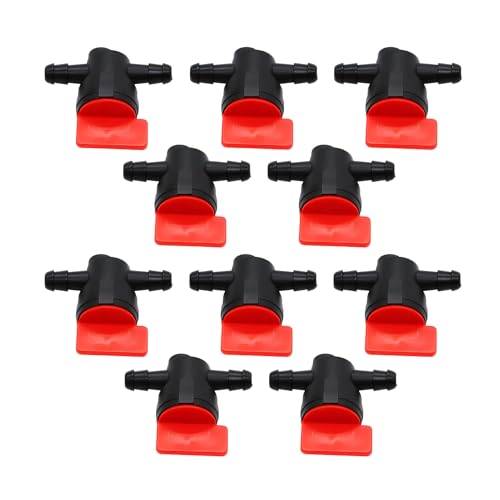
Best for bulk replacements and spares in inline gas fuel lines. This kit includes 10 inline shutoff valves suitable for 1/4″ ID fuel lines, offering convenient stocking for maintenance and rapid replacements in multiple locations.
- Best for: Large-scale projects or fleet maintenance with multiple lines
- Why selected: Value-packed kit; straightforward inline shutoff function
- Caution: Verify line ID compatibility with your system before installation
MaySpare Fuel Shut Off Solenoid 26214

Best for Stanadyne/John Deere injection pump applications requiring a 12V DC solenoid. This coil is designed as a replacement for specific injection pump models and supports typical Roosa Master and Stanadyne ecosystems.
- Best for: Diesel injection pump applications in tractors or light equipment
- Why selected: Direct compatibility with common pump models
- Caution: Ensure exact pump and part-number compatibility before purchase
Buying Guide
Key considerations for selecting an inline fuel shut off solenoid:
- Voltage and coil type: Ensure a 12V DC coil matches your system power supply and wiring.
- Inlet/outlet size: Choose 1/4″ or 3/8″ depending on your line diameter for proper fit and flow.
- Construction materials: Brass bodies offer durability and fuel compatibility but verify chemical compatibility with your fluid (not for drinking water in brass valves).
- Seals and gasket material: VITON gaskets provide high temperature and chemical resistance; confirm they meet your fluid needs.
- Response time: Some models actuate in under a second; faster actuation improves safety in shut-off scenarios.
- Durability and lifecycle: Look for claims of long cycle life if the valve will cycle frequently in your application.
- Fittings and installation kit: Some items include clamps, teflon tape, and fittings—these simplify installation.
- Compatibility with pumps and systems: Verify compatibility with specific injection pumps or lawn equipment if selecting a replacement part.
FAQ
- What is an inline fuel shut off solenoid used for?
An inline fuel shut off solenoid is used to electronically control the flow of fuel in a line, enabling rapid shutoff in response to a control signal or sensor input. - Are these valves universal for all fuels?
Most are designed for gasoline, diesel, kerosene, and similar fuels, but always check the product’s listed compatibility for your exact fluid. - Can I install these on any engine?
Installation depends on line size, pressure range, and electrical compatibility. Follow the manufacturer’s mounting and wiring instructions. - Do these valves require maintenance?
Regular inspection for leaks and electrical connections is recommended; some designs claim long lifecycles with proper operating conditions. - Are brass valves safe for drinking water?
Brass valves are generally not recommended for potable water projects due to material and chemical considerations. - What should I consider when choosing a kit with multiple valves?
Consider line ID compatibility, number of lines to service, replacement accessibility, and potential need for collective control in a single relay or control circuit.