Answering the common question “which iron remover should I use for my car?” this guide highlights five reliable options that target iron particles, fallout, and brake dust while staying safe on paint, wheels, glass, and chrome. These products are suited for enthusiasts who want a paint-ready surface for polishing, waxing, or ceramic coating. In practice, choose a product by intended surface (paint vs. wheels) and how clearly you want the iron reaction to show during cleaning.
Below is a quick summary of the selected products to compare features at a glance. The table provides quick reference for buyers prioritizing surface safety, color-change visibility, and application style.
| Product | Brand | Best For | Notes |
|---|---|---|---|
| Meguiar’s G250524 Ultimate Iron Remover | Meguiar’s | Painted surfaces, glass, chrome | Color-changing formula; no abrasives |
| Adam’s Iron Remover (16oz) | Adam’s Polishes | Paint and wheels | PH-neutral; quick color change |
| Adam’s Iron Remover (16oz, 2 Pack) | Adam’s Polishes | Paint, wheels, multiple vehicles | Faster activation; red bleed during cleaning |
| Gliptone GT Iron Eater (1 Gallon) | Gliptone | Paint, glass, rims | Color-change indicator; gel formula |
| Carfidant Iron Remover for Cars | Carfidant | Paint and wheels | pH-neutral; deep cleaning action |
Meguiar’s G250524 Ultimate Iron Remover

Meguiar’s Ultimate Iron Remover targets embedded iron particles and industrial fallout without abrasives. It dissolves iron contamination and helps prepare the paint for subsequent polishing or protection. The formula is calibrated for paint, glass, and chrome, and changes color as it cleans, signaling when decontamination is underway. Best for buyers who prefer a clear, paint-safe solution that doubles as a surface prep step before compounding or coating.
Best for: car painters, detailers, and DIY enthusiasts who want a single product to clean iron fallout on multiple surfaces before polishing. Limitations: the instruction emphasis is on paint-safe use; overspray should be minimized on trim or plastics to avoid staining.
Adam’s Iron Remover (16oz)

Adam’s Iron Remover targets bonded iron in paint surfaces and wheels. Its pH-neutral formula minimizes risk to clear coats and avoids staining trim. The product emphasizes rapid on-contact action with a color bleed from purple to red as iron deposits dissolve. Best for buyers who want a quick, paint-safe decon step before clay bar, wax, or ceramic coating. Caution: avoid overspray on exterior plastics and trim to prevent discoloration.
Adam’s Iron Remover (16oz, 2 Pack)

This two-pack option provides faster activation and stronger cleansing—ideal for shops or owners detailing multiple vehicles. It dissolves iron deposits and brake dust on paint and wheels with a vivid red bleed indicating active cleaning. The formula is safe for painted surfaces but should be kept away from trim or metallic parts to prevent staining. Choose this if you regularly work on more than one vehicle and want a reliable bulk option with consistent results.
Gliptone GT Iron Eater (1 Gallon)

Gliptone’s Iron Eater is a pH-neutral gel that delivers safe iron decontamination with a color-indicator feature. The thick gel clings to surfaces for extended dwell time, improving deep cleaning on paint, glass, aluminum, chrome, and various wheel types, including aluminum and chrome. Best for buyers who want a visible, real-time cleaning reaction and extended contact time for thorough iron fallout removal. Limitation: as a gallon-size product, it’s best for frequent detailers or service shops.
Gliptone GT Iron Eater pH Neutral Wheel Cleaner Gel

This wheel-specific variant uses a pH-neutral gel and a visible color change to signal iron removal. It is safe for all wheel types and surface finishes without acids or corrosives. Best for: wheel-focused detailing and brake dust removal, especially on alloy or chrome rims. Limitation: designed primarily for wheels; use on painted surfaces with care to prevent staining on trim.
Carfidant Iron Remover Car Detailing
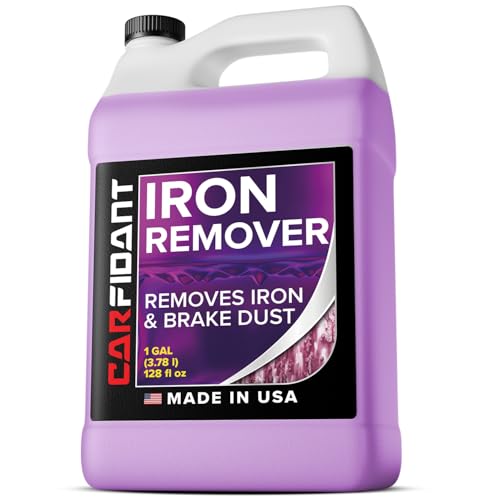
Carfidant’s Iron Remover decontaminates car paint and wheels with a pH-balanced formula that targets embedded iron particles and brake dust. It features a visible purple or color-change reaction to indicate successful iron removal and is marketed as safe for a variety of exterior surfaces, including chrome and glass. Best for buyers seeking a versatile, non-acidic option that can be used before clay bar, wax, or ceramic coating. Caution: test on inconspicuous areas if unsure about trim sensitivities.
Buying Guide: Key Considerations For Iron Removers
What surface will you decontaminate first? If paint is your primary target, prioritize products that are safe on clear coats and provide a visible reaction to iron deposits. For wheels, look for formulas specifically labeled safe for rims and chrome to avoid staining or dulling finishes.
How important is color-indicator feedback? Many iron removers change color during cleaning, letting you confirm iron removal in real time. This helps prevent under- or over-treatment and guides subsequent steps like claying or polishing.
What dwell time do you need? Gel-based products generally offer longer contact times for deeper cleaning, while spray formulas deliver rapid action. Extension of dwell time is beneficial for heavy contamination or older fallout.
Is pH balance a priority? Neutral pH formulas reduce the risk of damage to coatings, clear coats, and trim. For painted surfaces, a pH-neutral option is typically safer than acidic alternatives.
Do you detail multiple vehicles or only your own car? If you service several cars, a larger container or value pack may reduce cost per detail. Consider whether you need a versatile product that works on paint, glass, wheels, and chrome, or a product specialized for wheels only.
FAQ
- Q: Are iron removers safe for clear coats?
- A: Most pH-neutral iron removers are designed to be safe for clear coats when used as directed. Always test on a small area first and follow label instructions.
- Q: Can these products replace clay bar or polishing?
- A: Iron removers are typically a preparatory step to remove embedded iron before clay bar, polishing, or coating. They help achieve better results in subsequent steps.
- Q: Should I use iron remover before or after washing?
- A: Use iron remover before washing to avoid washing away the contaminant with water; many detailers apply it as a pre-wash step on a dry or lightly damp surface.
- Q: Can I use iron remover on wheels and painted surfaces the same day?
- Q: How do I know when the iron removal is complete?
- A: Look for the color-change indicator and the reduced “bleed” as deposits are removed. Some products also show reduced pigment transfer after dwell time.
A: Yes, if the product specifies compatibility with both surfaces. Always rinse well and avoid prolonged contact with trim or plastics unless specified safe.