Answering the common question “which battery charger should I buy for lead-acid and LiFePO4 batteries?” this guide highlights five top Amazon picks. These chargers are designed for cars, boats, motorcycles, and other 12V/24V lead-acid and lithium-ion batteries. They offer automatic maintenance, desulfation, and temperature compensation to protect and extend battery life. This overview helps buyers choose by battery type, usage, and environment. The quick reference table below compares the five selected models to aid easy decision-making.
| Product | ||
|---|---|---|
| YONHAN Battery Charger 20A 12V/24V | Multi-voltage, 7-stage charger | Fast charging with repair mode, winter storage |
| NOCO GENIUS1 | 1A, 6V/12V, smart maintainer | Compact, everyday lead-acid and LiFePO4 batteries |
| NOCO GENIUS10 | 10A, 6V/12V, smart maintainer | Higher power, all-in-one charging solution |
| NOCO GENIUS2 | 2A, 6V/12V, smart maintainer | Compact, Force Mode for low-voltage batteries |
| Battery Tender Junior | 12V, 800mA, maintainer | Powersports and small batteries, simple operation |
YONHAN Battery Charger 20A 12V/24V – All‑Battery Maintenance

The YONHAN charger is a versatile, 7-stage charger and maintainer that supports 12V and 24V systems. It handles LiFePO4 and multiple lead-acid chemistries, including AGM, GEL, EFB, and flooded batteries. This unit is designed to charge, maintain, and even repair aging or idle batteries. Its winter mode protects stored batteries during cold periods, while smart protection features guard against reverse polarity, overcurrent, short circuits, and overheating. It’s best for automotive, marine, and heavy equipment batteries that require regular maintenance and occasional recovery attempts.
Who it’s best for: owners who want a single charger capable of 12V/24V operation and occasional repair cycles, especially for winter storage. The device emphasizes safety and battery longevity. Caution: not a jump starter; it must be plugged into an outlet to operate. It may be more than needed for simple seasonal charging, but excels for long-term maintenance and restoration.
Key features in brief:
– 12V/24V operation, 20A/10A charging modes
– 7-stage quick charging plus repair mode
– Temperature aware, winter/summer modes
– Comprehensive protections and fireproof materials
NOCO GENIUS1: 1A 6V/12V Smart Battery Charger

The GENIUS1 is a compact, all-in-one charging solution that combines a battery charger, maintainer, trickle charger, and desulfator. It supports 6V and 12V lead-acid batteries and LiFePO4, including flooded, AGM, and marine varieties. An integrated thermal sensor adjusts charging to ambient temperatures, reducing overcharging in heat and undercharging in cold. This unit is ideal for small spaces and basic daily maintenance. Caution: limited output means it’s better suited for smaller batteries or less demanding charging needs.
Who it’s best for: light-duty users needing a small, reliable charger that maintains several types of batteries without heavy power requirements. Choose this if you prioritize size, quiet operation, and automatic desulfation. Limitation: not ideal for larger or deeply discharged packs that require higher current.
NOCO GENIUS10: 10A Smart Charger

The GENIUS10 expands power with 10A current, offering a robust all-in-one solution for 6V and 12V lead-acid and LiFePO4 batteries. It provides a compact design with a broader charging repertoire, including desulfation and temperature compensation to maintain battery health across seasons. The unit targets users with more demanding maintenance needs, such as larger marine batteries or frequent use of power-hungry equipment. Caution: higher current means more heat; ensure adequate ventilation during operation.
Who it’s best for: those needing faster charging and stronger maintenance for mid-sized to large batteries. It’s a good step up from entry-level models and supports a wider range of battery types. Better for users who expect regular deep cycling or longer storage intervals.
NOCO GENIUS2: 2A 6V/12V Smart Charger

GENIUS2 delivers 2A of charging current in a compact package. It supports a wide range of lead-acid batteries and LiFePO4, including flooded and maintenance-free options. The unit also features Force Mode to charge very low-voltage batteries by bypassing sensing limitations. This is useful for reviving marginal batteries without replacing them entirely. Caution: lower current means slower recovery for deeply discharged packs.
Who it’s best for: customers needing a compact charger with more capability than the smallest models but without sacrificing portability. It’s ideal for motorcycles, small boats, and trickle-maintenance on compact car batteries. Choose this if space is tight and you need a reliable desulfator and smart maintenance in one unit.
Battery Tender Junior 12V – 800mA Maintainer
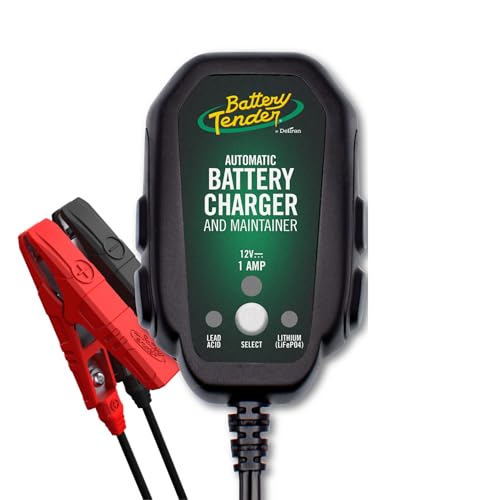
The Battery Tender Junior is a simple, 12V charger and maintainer with 800mA output. It is designed for lead-acid and lithium batteries, and it allows easy switching between battery types. The unit maintains battery readiness for powersports and small vehicles, preventing self-discharge over storage periods. The straightforward interface makes it a reliable choice for casual users who prioritize ease of use over high-power charging. Caution: 800mA is modest, so it’s best for smaller batteries or long-term maintenance rather than quick charging.
Buying Guide: Key Purchase Considerations
- Battery Type Compatibility: Confirm support for lead-acid variants (AGM, Gel, flooded) and LiFePO4 if used. For mixed batteries, choose a charger with broad compatibility and desulfation features.
- Voltage Range: Ensure the charger handles the system voltage (6V, 12V, and some 24V). Dual-voltage models offer versatility for different vehicles.
- Charging Modes and Stages: Look for multi-stage charging (desulfation, bulk, absorption, float) and any repair or pulse recovery modes for older batteries.
- Temperature Compensation: A smart sensor prevents overcharging in heat and undercharging in cold, protecting longevity during seasonal changes.
- Maintenance vs. Fast Charging: Decide between daily maintenance (low current) and faster charging (higher current) based on battery capacity and usage patterns.
- Safety Features: Prioritize models with reverse polarity protection, short-circuit protection, overcurrent safeguards, and fire-resistant materials.
- Space and Portability: If you have limited space, prioritize compact units with adequate output for your battery size.
- Limitations and Warnings: Some units are not jump starters or require continuous wall power; check usage notes to avoid misapplication.
FAQs
- What is a battery maintainer versus a charger? A maintainer keeps a ready charge on a battery without overcharging, while a charger adds a first-time or replacement charge. Some devices combine both functions with smart modes.
- Can these chargers revive a dead battery? Some have pulse repair modes to recover idle or aged batteries, but totally dead or severely sulfated packs may not be recoverable.
- Are lithium batteries supported by these options? Many models support LiFePO4 alongside lead-acid chemistries; verify each product’s battery lists before purchasing.
- Do I need a high-current charger for a motorcycle battery? Not typically; most motorcycles use smaller 1–2A to 4A units. Higher currents are more useful for cars or boats with larger batteries.
- Is temperature compensation necessary? It helps prevent damage from heat or cold, especially in outdoor or garage environments where temperature varies.
- What’s the difference between a desulfator and a charger? A desulfator targets lead sulfate crystals to improve battery health, while a charger focuses on restoring and maintaining charge.