Answering the top search question for boaters: choosing a reliable marine fuel tank depends on capacity, compatibility, and handling in tight spaces. This guide highlights five tanks designed for outboard boats, inflatables, and small cruisers. The selections balance built-in gauges, venting, and rugged HDPE construction. Best for extended outings, easy under-seat storage, or deck-access refueling, these tanks suit anglers, weekend boaters, and saltwater users alike. Below is a quick product summary to compare capacities, gauges, and portability at a glance.
| Product | Capacity | Key Feature | Best For |
|---|---|---|---|
| Scepter 12 Gallon Portable Marine Gas Can | 12 gal / 45 L | Built-in fuel gauge, 2-way vented cap | Longer trips, space-saving storage |
| VEVOR Marine Tank 14.53 gal | 14.53 gal / 55 L | Visible gauge, 9.8 ft hose | Outboard adventures, larger tanks |
| Scepter 9 Gallon Portable Marine Gas Can | 9 gal / 34 L | Built-in gauge, 2-way vented cap | Compact boats, under-seat storage |
| AloneGoer 3 Gallon Portable Tank | 3 gal / 12 L | HDPE-EVOH-HDPE barrier, UV resistant | Spare fuel, small craft or Yamaha use |
| attwood 6-Gallon Portable Tank | 6 gal | Multi-layer construction, automatic vacuum valve | Rugged, versatile marine use |
Scepter 12 Gallon Portable Marine Gas Can

The Scepter 12-gallon tank provides ample capacity while remaining compact for transport and storage. It is suited for outboard motor boats needing longer running time. A 2-way vented cap allows air flow during refueling and automatically releases pressure above 5 PSI to reduce vapor buildup. This can is compatible with diesel and ethanol-blended fuels and includes a built-in fuel gauge for quick level checks. The pickup is integrated, and the fuel line attaches later. Best for boats that require higher capacity without sacrificing space. Caution: ensure all fittings are compatible with your engine’s fuel system.
VEVOR Marine Tank, 14.53 Gallon

This tank offers a clear fuel gauge with a visible level indicator and a long 9.8 ft hose for flexible mounting. It has a separate inlet and outlet to reduce spillage and supports 80% fill to limit gasoline evaporation and security risks. It’s built in high-density polyethylene and designed for Yamaha connectors, making it a practical match for many outboards. Best for anglers or deck boat owners who want a larger, gauge-equipped option. Limitation: the 9.8 ft hose is specific to certain configurations, so verify compatibility with your fittings before purchase.
Scepter 9 Gallon Portable Marine Gas Can

The 9-gallon tank offers a compact profile with a built-in gauge and a 2-way vented cap for safe refueling. It is compatible with diesel and ethanol-blended fuels and supports standard 1/4 NPT marine tank fittings. It is best for boats needing a balance between capacity and under-seat storage. Consider this option if you want reliable gauge visibility in a smaller footprint. Caution: ensure the vented cap remains properly sealed to avoid vapor leakage in high heat.
AloneGoer 3 Gallon Portable Tank
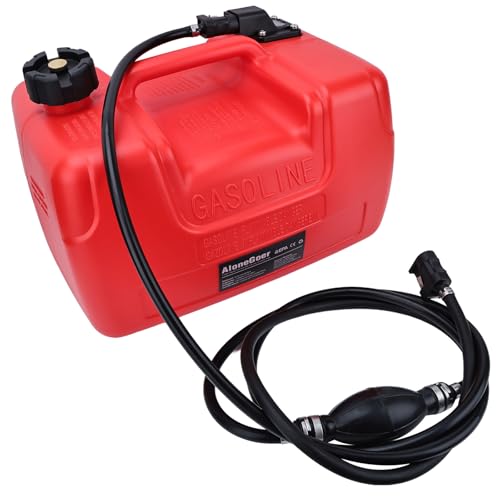
This 3-gallon tank uses a multi-layer HDPE-EVOH-HDPE barrier to reduce fuel molecule permeation and evaporation by up to 98%. It includes a coil-friendly design and is UV-stabilized for salt spray or humid environments. Best for small crafts, Yamaha outboards, or as a spare fuel tank. Limitation: lower capacity means more frequent refueling on longer trips.
attwood 6-Gallon Portable Tank

Attwood’s 6-gallon tank features proven automotive-grade multi-layer construction and an automatic vacuum valve to ensure steady fuel flow without manual venting. It’s designed for extreme environments and heavy use. Best for boats that need a durable, reliable tank with automatic venting. Limitation: while robust, its size is mid-range and may not fit under tighter seating on smaller boats.
Buying Guide: Key Purchase Considerations
- Capacity vs. vessel size: Select capacity that matches typical trip length and boat space. Larger tanks offer longer runs but require more storage.
- Vent system: Vented caps reduce vapor buildup but ensure compatibility with your refueling setup.
- Gauge visibility: Built-in gauges simplify fuel management; verify gauge accuracy if possible.
- Material and durability: HDPE tanks resist corrosion and aging; UV stabilization extends life in sun-exposed areas.
- Fittings and hose compatibility: Check inlet/outlet fittings and hose length to match your engine and deck layout.
- Compatibility with fuels: Some tanks support diesel and ethanol blends; verify fuel type for your outboard or inboard engine.
Frequently Asked Questions
- What capacity is best for a small inflatables boat? Typically 3–6 gallons, balancing weight and space while ensuring enough range.
- Do all marine tanks require a vented cap? Most require venting to prevent vapor buildup; ensure your chosen tank includes a vented cap if refueling indoors or in tight spaces.
- Can I use a car gasoline can for marine use? Use marine-approved tanks designed for fuel stability and evaporation control to avoid safety risks.
- How important is a built-in gauge? It helps plan refueling and reduces the chance of running out unexpectedly on a trip.
- Are these tanks compatible with Yamaha connectors? Some models list compatibility; always confirm connectors and hose diameter before purchase.
- What is the recommended fill level? Many tanks recommend filling to 80% to limit evaporation and expansion risks.