Find the right micron cabin air filter to improve inside-air quality for you and your passengers. This guide highlights five high-coverage options that balance filtration efficiency with airflow. Best for drivers who want odor control, strong particulate trapping, and easy maintenance. Each product is chosen for compatibility, filter media quality, and practical performance guidance.
Summary table of selected products:
| Product | Best For | Why It Stands Out | Limitations |
|---|---|---|---|
| BOSCH 6091C HEPA Cabin Air Filter | Families seeking odor-free, clean air | High efficiency HEPA media with dense filtration and added carbon/static layers | Higher price point |
| Puroma Cabin Air Filter with Activated Carbon | Urban drivers and commuters | Activated carbon for odor control and close-mesh filtration for good airflow | Warranty details not listed |
| SPEARHEAD BE-134H HEPA Cabin Filter | All-around filtration with high particle capture | HEPA-level capture up to 99.97% of 0.3 micron particles | Vehicle compatibility varies by model |
| Carory Activated Carbon Cabin Filter (Honda/Nissan/Chrysler lines) | Multi-vehicle fit with carbon odor control | Broad compatibility and activated carbon for odors | May require cross-checking OE numbers |
| BOSCH 6092C HEPA Cabin Air Filter | Ford/Lincoln heavy-use vehicles | HEPA-grade filtration with dense media and carbon layer | Model-specific compatibility |
BOSCH 6091C HEPA Cabin Air Filter
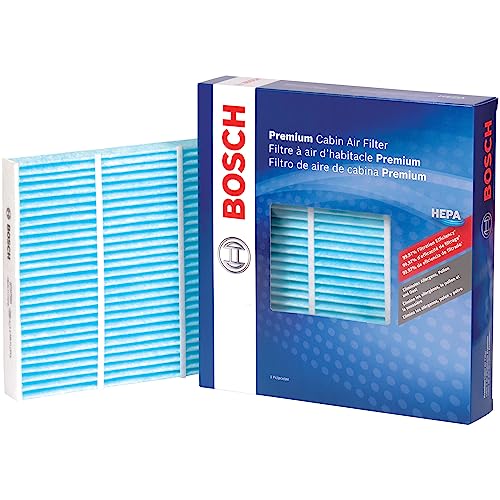
This Bosch filter uses a melt-blown electrostatic layer combined with a dense media and an added static cotton layer to boost filtration capacity. It aims to trap a wide range of particulates and odors without restricting airflow. Best for families or anyone sensitive to indoor air quality, especially in urban or high-traffic areas. The filter is positioned as a premium option with true HEPA-style performance for select Buick, Cadillac, Chevrolet, GMC, and other models.
Best for: Drivers who want strong particulate capture and odor reduction for family vehicles. Limitations: Higher price and model-specific fit; verify compatibility before purchase.
Puroma Cabin Air Filter With Activated Carbon

Puroma’s cabin filter combines a soda-woven layer with activated carbon to neutralize odors while maintaining a close-meshed filtration surface for solid particle protection. It’s designed to optimize HVAC performance by preserving steady airflow and improving cabin air quality. It’s suited for daily commuters and drivers in areas with higher air pollution or dust.
Best for: Urban drivers and families seeking odor control and reliable airflow. Limitations: Replacement cadence varies; follow vehicle-specific maintenance guidelines for best results.
SPEARHEAD BE-134H HEPA Cabin Filter

This SPEARHEAD filter claims up to 99.97% filtration of particles as small as 0.3 microns, with high air permeability to avoid airflow restrictions. It’s positioned as a broad replacement for many models across Acura, Honda, Infiniti, Toyota, and other lines. The higher filtration efficiency is beneficial for sensitive occupants or drivers in heavy-pollution zones.
Best for: Those needing HEPA-level filtration with minimal impact on blower performance. Limitations: Compatibility depends on exact vehicle year/model; check fitment notes carefully.
Carory Activated Carbon Cabin Filter (Nissan/Infiniti/Chrysler/Volkswagen)
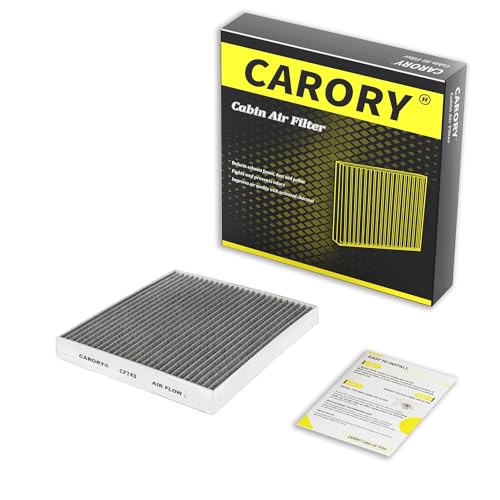
Carory’s filter specializes in a broad compatibility range, including Nissan Armada, Frontier, Infiniti Q50 and others, with activated carbon to help curb odors. It’s useful for multi-vehicle households or those who switch cars but want a common filtration solution. The listing includes multiple OE-number references for cross-checking.
Best for: Multi-vehicle households or owners seeking carbon odor control across several brands. Limitations: Ensure exact OE replacement numbers line up with your vehicle to avoid fit issues.
BOSCH 6092C HEPA Cabin Air Filter
A sibling to the 6091C, this Bosch option focuses on HEPA-grade performance with a durable media stack and carbon layer for odor management. It’s designed for select Subaru, Toyota, and other models, offering the same core principles of HEPA-level filtration and robust air quality improvement.
Best for: Subaru and Toyota owners seeking high filtration with odor control. Limitations: Always confirm exact model compatibility and installation requirements.
BOSCH 6081C HEPA Cabin Air Filter
This Bosch filter emphasizes HEPA-level performance with a design that minimizes airflow restriction while maintaining high filtration efficiency. The media stack mirrors Bosch’s premium approach to protect cabin air quality across Ford Expedition and Lincoln Navigator platforms, among others.
Best for: Ford and Lincoln SUVs and trucks needing reliable HEPA filtration. Limitations: Verify exact vehicle compatibility to ensure a proper fit.
Buying Guide: How to Choose the Right Micron Cabin Air Filter
What micron rating matters for cabin filtration?
Most cabin filters target particulate removal in the 0.3–0.5 micron range with HEPA-like performance. A higher efficiency often means better protection for respiratory comfort, but may come with slightly reduced airflow in older HVAC systems. Look for filters that balance filtration with media designed for high airflow.
Do you need activated carbon?
Activated carbon helps neutralize odors and some gases. If you frequently drive in urban environments, near industry, or with strong odors, carbon-backed filters can provide noticeable benefits.
How to verify compatibility?
Always match the exact vehicle make, model, and year. Many filters list a broad range of applications, but fit can vary by trim and HVAC configuration. Use the OE number references when available and confirm with the vehicle’s owner manual or dealer resources.
How often should you replace?
General guidance suggests replacing cabin filters every 12,000–15,000 miles or annually in light use. In heavy-pollution areas or dusty conditions, sooner replacement (every 5,000–7,500 miles) can maintain airflow and odor control.
How to install quickly and safely?
Typically, you’ll access the filter housing under the glove box or near the passenger footwell. Remove the housing cover, slide out the old filter, and insert the new one with the airflow arrows facing the correct direction. Reassemble and test the blower at low, then medium speed to ensure air is flowing evenly.
Frequently Asked Questions
- What is a micron cabin air filter? A filter designed to capture very small particles, often using HEPA-grade media, to improve cabin air quality.
- Do activated carbon filters really remove odors? Yes, activated carbon adsorbs many odor-causing molecules, helping reduce smells in the cabin.
- Can I reuse a cabin air filter? No, cabin air filters are designed for single-use replacement to maintain filtration efficiency and airflow.
- How do I know it fits my car? Check the product’s compatibility list, OE references, and your vehicle’s manual for the exact replacement part number.
- Is higher filtration always better? Higher filtration can improve air quality but may slightly impede blower performance if the filter is much denser than stock; ensure compatibility with your HVAC system.
- When should I replace the cabin air filter if I drive in a dusty area? Consider replacing every 5,000–7,500 miles to sustain air quality and HVAC efficiency.