The best OBD II trouble code scan tools quickly tell you why your check engine light is on and help you decide whether a visit to the mechanic is needed. This guide focuses on user-friendly, reliable options for everyday car owners and DIYers. Each tool is selected for clear code definitions, live data, and ease of use across common vehicle makes and models. Ideal buyers include weekend mechanics, new car owners learning diagnostics, and fleet managers who want fast, onboard insights.
Summary of selected products:
- ANCEL AD310 Classic Enhanced Universal OBD II Scanner
- ANCEL AD410 Enhanced OBD2 Scanner
- FOXWELL NT301 OBD2 Scanner
- VDIAGTOOL VD10 OBD2 Scanner
- Xtruck MS309 OBD2 Scanner
ANCEL AD310 Classic Enhanced OBD II Scanner

The AD310 is a compact, plug-and-go tool designed for quick reads of emission-related codes and clearing codes after repairs. It provides live data, freeze-frame view, I/M readiness, and vehicle information without requiring batteries or chargers. Best for home DIYers who want fast results at the port with a simple interface and a sturdy build.
Best for: DIYers who need a reliable, cost-effective scanner that reads and clears codes quickly and travels well. Potential limitation: limited advanced diagnostics beyond emission-related codes.
Caution: While the device reads and clears codes, it does not replace professional diagnostics for complex powertrain issues. For best results, pair with a service manual or online database when unusual codes appear.
ANCEL AD410 Enhanced OBD2 Scanner

The AD410 offers wide compatibility with OBDII vehicles and supports multiple protocols, including CAN. It features over 42,000 built-in DTC lookups and allows users to read and clear fault codes, check readiness, and perform basic system tests. It’s suited for users who want deep code lookups without a separate app or subscription and who operate across various markets.
Best for: Users who prioritize a broad library of trouble code definitions and robust compatibility. Better for: owners who want more comprehensive code interpretation before repair. Caution: The AD410 is primarily an engine code reader and does not support some non-engine systems like ABS or SRS in all cases.
FOXWELL NT301 OBD2 Scanner

The NT301 provides live data graphs, DTC readouts, and the ability to view VIN and MIL status. It is compatible with most 1996+ gasoline cars and many diesel models, but it does not support advanced features like ABS or EPB in all cases. It is a practical choice for general diagnostics and ongoing monitoring of engine performance.
Best for: Shoppers who want live data visualization and straightforward fault-code management. Choose this if: you mainly need engine-related diagnostics and basic live data without premium system testing. Caution: It may not support all advanced systems on newer vehicles, and some features require proper vehicle compatibility checks.
VDIAGTOOL VD10 OBD2 Scanner
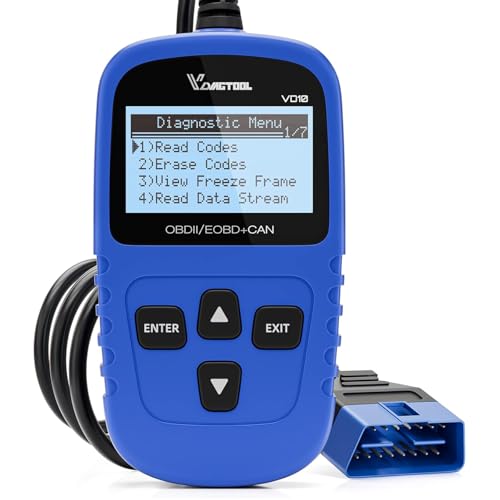
The VD10 targets DIYers with a straightforward interface and a robust data set. It reads and clears codes, shows live data, and displays I/M readiness and freeze-frame data. The built-in DTC database offers definitions on the screen with practical explanations, making it a solid all-around choice for everyday vehicle maintenance.
Best for: Home users who want a balanced tool with quick code lookup and easy-to-understand definitions. Limitation: The database covers over 3,000+ codes; for rare or brand-specific codes, cross-reference may still be needed.
Xtruck MS309 OBD2 Scanner
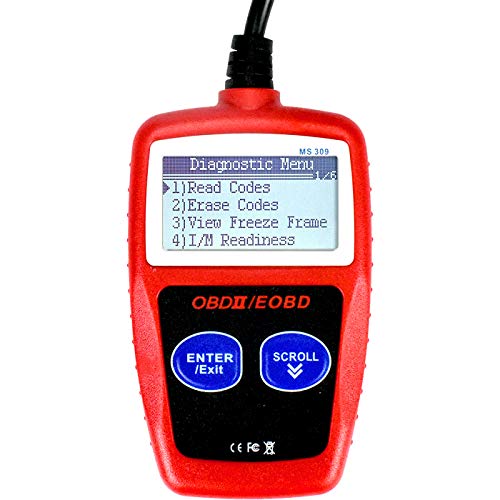
The MS309 is a plug-and-play device that reads and clears engine codes and supports CAN and other current OBD2 protocols. It retrieves freeze-frame data and supports I/M readiness checks. It’s a practical tool for DIYers and small workshops seeking a reliable, no-fruss interface for routine diagnostics and code clearing.
Best for: Users who want a straightforward, out-of-the-box scanner with universal OBD2 support and clear code readouts. Caution: It focuses on engine diagnostics and may not provide in-depth ABS/SRS diagnostics on all vehicles.
Buying Guide: How To Choose The Right OBD II Scan Tool
What should you consider when selecting an OBD II scanner?
- Vehicle compatibility: Ensure the tool supports your make, model year, and whether you need CAN or legacy protocols.
- Code reading and clearing: Look for live data, freeze-frame, MIL/I/M readiness, and the ability to erase codes after repairs.
- Data presentation: Favor devices with clear on-screen definitions, large displays, and live data graphs if you want deeper insights.
- Advanced features: Some tools offer EVAP tests, O2 sensor checks, or SRS/ABS diagnostics. Decide if you need these extras.
- Ease of use: A compact design, clear labeling, and straightforward menus reduce the learning curve for new users.
- Power source: Most units draw power from the vehicle; verify if a battery is required or if the tool is battery-free.
- Language and regional support: If you prefer multilingual interfaces, check for English and additional language options.
Common Scenarios And Tool Recommendations
- Best for beginners: AD310 — simple, fast, and portable for quick checks.
- Best for code databases: AD410 — broad DTC lookup and broad compatibility.
- Best for live data: NT301 — graphing and VIN retrieval for ongoing monitoring.
- Best budget all-around: VD10 — practical, easy-to-use with solid diagnostics library.
- Best for engine-focused reads: MS309 — reliable engine-code tool with I/M readiness checks.
Usage Tips
- Always connect to a running engine for accurate live data readings.
- Record freeze-frame data to help diagnose when the fault first occurred.
- Clear codes only after repairs are completed to avoid losing track of the fault’s status.
FAQ: Quick Answers For Buyers
- What is an OBD II scanner used for?
It reads diagnostic trouble codes from your vehicle’s computer, shows live engine data, and can clear codes after repairs.
- Do these tools work on all cars?
Most are compatible with US 1996+ and many EU/ASIAN vehicles, but always verify model-year compatibility and CAN support.
- Can I use an OBD II scanner to fix problems myself?
These tools help identify possible causes and confirm repairs, but some issues require professional service.
- Do I need to buy a premium model for advanced diagnostics?
Advanced features vary by model; select based on your required capabilities (ABS, SRS, EVAP, etc.).
- Is live data important for diagnosing emissions problems?
Yes—live data helps trace trends and verify repairs beyond just reading codes.
- Will clearing codes erase vehicle history?
Clearing codes removes the current fault indicators; it does not reset the vehicle’s history or permanently fix issues.