Looking to reduce oil leaks and head gasket concerns, with a product you can buy today? This guide highlights five reliable oil-stop-leak products, explains who they’re best for, and shows how to choose with clear, practical criteria. Ideal buyers include DIY enthusiasts, daily drivers with minor leaks, and owners seeking a temporary fix while planning professional service. Below is a quick comparison table of the selected options to help you decide at a glance.
| Product | Best For | Notes |
|---|---|---|
| Bar’s Leaks OS-1 Oil Seal Engine Oil Burning & Leak Repair | General leaks and oil burning in many engines | Good for seals, guides, and broad engine support |
| Bar’s Leaks HG-1 Head Seal | Blown head gasket issues and coolant leaks | Antifreeze-compatible, no flush required |
| BlueDevil 49499 Oil Stop Leak | Permanent seal for leaks | Easy to use, widely compatible |
| XADO ATOMEX Oil Additive | Elasticity restoration and leak prevention | Multi-purpose sealing and protection |
| Bar’s Leaks 1100 Head Gasket Repair Sealant | Block leaks and cracked head seals | Seals cracked heads and blocks |
Bar’s Leaks OS-1 Oil Seal Engine Oil Burning & Leak Repair

Best for: engines that burn oil or leak through main seals and gaskets. OS-1 is designed for gasoline and diesel engines, including turbocharged and EcoBoost systems, and can be used in hybrids or racing engines at appropriate dosages. It renews worn valve seals and guides and helps stop oil burning and blue exhaust smoke not only in standard engines but also heavy-duty applications when used as directed. Caution: verify that consumption does not exceed typical thresholds for your vehicle to avoid masking symptoms without addressing root causes.
Bar’s Leaks HG-1 Head Seal Blown Head Gasket Repair

Best for: addressing blown head gasket issues and seepage around head and intake gaskets. HG-1 aims to seal warped or cracked heads and blocks and is antifreeze-compatible, compatible with various coolant types, and requires no draining or thermostat removal in many cases. It’s suitable for vehicles that can idle for about 15 minutes without overheating. Caution: not a substitute for severe engine damage or a coolant leak that exceeds normal head gasket failure, and results depend on the condition of the engine surfaces.
BlueDevil Oils Stop Leak – 8 Ounce

Best for: a lightweight, user-friendly option to seal leaks in multiple engine types. BlueDevil Stop Leak is designed for easy use—pour the recommended amount into the oil slump or crankcase. It provides a permanent-seal approach and is compatible with gasoline and diesel engines. Limitation: performance can vary depending on leak size and engine condition; not guaranteed to fix large, structural gasket failures.
XADO ATOMEX Oil Additive Stop Leak Engine

Best for: restoring gasket and seal elasticity and preventing leaks across many engine types, including cars and motorcycles. XADO emphasizes elasticity restoration, leak prevention, and overall protection, which can be beneficial in older engines or those with worn seals. Caution: results depend on the extent of gasket wear and the compatibility with engine materials and oil types.
Bar’s Leaks 1000 High Mileage Engine Repair
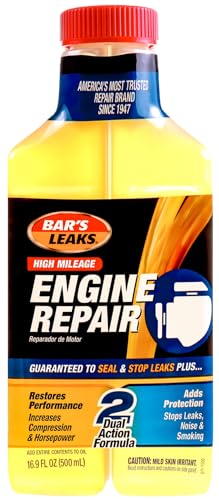
Best for: high-mileage engines experiencing leaks, reduced compression, or smoking. This formula supports performance restoration, aiming to increase compression and horsepower while reducing oil consumption and noise. It’s positioned as a last-resort option before more invasive repairs. Limitation: success rates are highly dependent on the underlying wear and engine condition; not a guaranteed fix for severe gasket or bearing damage.
Buying Guide
What should you look for in an oil stop-leak product?
- Engine compatibility: Confirm the product supports gasoline, diesel, your engine type, and any turbocharged or high-mileage configurations.
- Leak type: Identify whether you’re addressing oil seals, valve seals, head gaskets, or block leaks to choose a product that targets the right area.
- Formulation goals: Some products aim to seal leaks permanently, others to restore elasticity or reduce oil burning. Match to your symptoms and maintenance plan.
- Coolant interactions: If you have head gasket concerns, ensure the product is antifreeze-compatible and requires no coolant flushing when applicable.
- Ease of use: Consider products that are simple to add to the crankcase and do not require disassembly for a temporary fix.
Choosing by symptom and engine condition
- Minor leaks with no overheating: A basic oil-stop-leak product may be sufficient to slow leaks and extend service intervals.
- Oil consumption without coolant loss: Look for formulas that seal valve seals or worn guides and restore sealing surfaces.
- Overheating or suspected head gasket issues: Prefer antifreeze-compatible products designed for head gasket sealing, and seek professional evaluation if overheating persists.
- High-mileage engines: High-mileage-focused formulas can help reduce oil consumption and restore compression, but may not replace the need for component repair.
Application tips and limits
- Follow dosage instructions precisely for your engine size and model.
- Do not rely on stop-leak products for major mechanical failures; they are intended as preventive or temporary measures.
- Monitor oil levels, coolant condition, and engine temperature after use to detect any new issues early.
- Consider combining stop-leak treatments with policy-based maintenance, such as gasket inspections and oil-change schedules.
FAQs
- Do oil-stop-leak additives really fix head gaskets? They can seal minor leaks and slow leak rates, but severe head gasket damage typically requires professional repair.
- Are these products safe for all engines? Most are designed for gasoline and diesel engines, but always check compatibility with your specific model and any turbos or high-mileage configurations.
- Can I use multiple products at once? It’s generally not recommended to mix different formulas; pick one product aligned with your symptoms and follow the label.
- Will these products affect oil pressure? Most formulas are designed to seal leaks without impacting oil pressure, but monitor pressure if you notice changes after use.
- When should I stop using a stop-leak product? If there’s no improvement after the recommended treatment window, or overheating or severe leaks occur, seek professional assessment.
- Is it safe to drive after applying a leak-stop additive? For minor leaks and within product guidelines, driving is usually acceptable, but avoid aggressive driving if overheating or major leaks are suspected.