If you drive a classic European or old-style American car, you need reliable torpedo fuses to protect electrical circuits. This guide compares five top options and explains who each product is best for, including cautions to consider before buying. The selections cover a range of amperages, materials, and packaging to suit vintage vehicle restorations, daily drivers, and DIY repairs alike.
| Product | Amperage Range | Best For | Notes |
|---|---|---|---|
| Eoppen 200Pcs Torpedo Fuses | 5–25A | Classic car hobbyists needing a complete starter kit | Color-coded and easy to identify |
| Performance Tool W5375 | 5–30A | Comprehensive AGC glass fuse set | Clear plastic case for organization |
| Saihisday Car Fuses Torpedo Type | 5–40A | Older European vehicles | Multiple values included |
| EC Buying 200PCS Kit | 5–40A | Versatile kit for vintage cars | Durable plastic and metal fuse construction |
| ZOOKOTO 72pcs Kit | 0.5–30A | Budget-friendly selection | Includes fuse seats |
Eoppen 200Pcs Torpedo Fuses European Automotive Kit
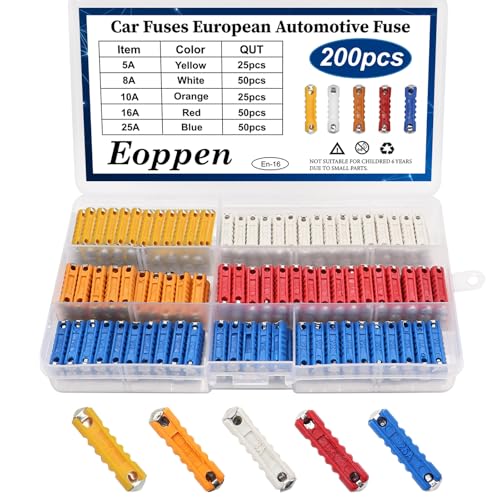
Best for: Hobbyists building or maintaining classic vehicles that require a broad range of fuse values. This kit includes five amperage sizes: 5A, 8A, 10A, 16A, and 25A, covering common circuits in old European and American cars.
Why selected: The torpedo design is color-coded for quick identification, aiding quick repairs in restoration projects. The set provides a wide assortment, which helps reduce downtime when diagnosing electrical faults in vintage vehicles.
Caution: The kit relies on color coding for amperage, so verify a fuse’s function during installation to avoid mismatched values in critical circuits.
Performance Tool W5375 60pc AGC Glass Fuse Assortment

Best for: Donor cars or restoration projects needing a compact, organized glass fuse kit with multiple common values. The set includes 5A, 10A, 15A, 20A, 25A, and 30A fuses within a clear case.
Why selected: The clear plastic case aids quick access and sorting by amperage during electrical work. Glass tube fuses offer predictable blow characteristics for standard automotive circuits.
Caution: Glass fuses can break if mishandled; handle with care to avoid injury and ensure proper seating during replacement.
Saihisday Car Fuses Torpedo Type European 5A–40A

Best for: Owners of older European vehicles that require a wider amperage range, from 5A up to 40A. This set emphasizes compatibility with classic European electrical systems.
Why selected: The kit explicitly targets classic European cars, including a range of values suitable for common vintage circuits and protection needs.
Caution: Some fuses may have shell-melting behavior before the internal element breaks; ensure proper fuse seating and verify circuit protection after installation.
EC Buying 200PCS Car Torpedo Fuse Kit

Best for: Mechanic shops or hobbyists stocking a broad assortment for multiple builds, particularly for older European vehicles. The kit includes 5A, 8A, 16A, 25A, and 40A values.
Why selected: Durable plastic and metal construction provide reliable protection. The kit is designed for quick installation and broad circuit coverage in classic car electrical systems.
Caution: Ensure you choose the correct amperage for each circuit; mismatched values can impact protection and performance in critical systems.
ZOOKOTO 72pcs Kit for Fuses and Seats

Best for: Budget-conscious restorers needing a reasonable range of fuses and a few seats for quick replacement. Values include 0.5A to 30A across 6x30mm quick-blow glass fuses.
Why selected: A compact, affordable option that covers the most commonly used amperages in older vehicles, with the added convenience of fuse seats.
Caution: This kit focuses on quick-blow glass fuses; verify the fuse type matches your car’s original configuration to avoid mismatches in protection style.
Buying Guide
What fuse type should I choose for a vintage car?
For classic cars, torpedo or bullet-style fuses in a range of amperages are typical. Choose a kit with multiple values (5A, 8A, 16A, 25A, etc.) to cover common circuits while avoiding under- or over-protection.
What materials matter in a fuse kit?
Quality kits use durable plastic and metal shells, with corrosion resistance and reliable conductivity. Glass fuses can be easier to inspect visually, while torpedo designs offer color-coded amperages for quick identification.
Is a storage case important?
Yes. A kit with a clear, organized case helps prevent misplacing fuses during a project and speeds up repairs on vintage vehicles where time is a factor.
How many fuses should I stock?
Tend to select a kit offering at least 5–6 common values in sufficient quantity. If you work on multiple projects, consider larger assortments like 60–200 pieces to cover many repairs without frequent repurchasing.
What cautions should I keep in mind?
Ensure amperage ratings match the circuit requirements. Do not force fuses into slots if they don’t fit, as improper seating can cause poor protection. When in doubt, consult vintage-car wiring diagrams or a professional.
Which kit should I choose for European classics?
For older European cars, kits that include 5A, 8A, 16A, 25A, and 40A fuses are commonly advantageous. Look for color-coded torpedo fuses and robust shell construction to withstand vintage electrical systems.
Quick reference comparison
- Best all-around starter kit: Eoppen — wide amperage range, color-coded torpedo fuses
- Best organized set: Performance Tool — clear case and glass fuses
- Best European focus: Saihisday and EC Buying — broad values for older European vehicles
- Budget option with seats: ZOOKOTO — includes fuse seats and smaller values
FAQ
- Q: Are torpedo fuses compatible with all classic cars?
A: They cover many old European and American circuits, but check your vehicle’s original fuse type and amperage before buying. - Q: What is the difference between torpedo and glass fuses?
A: Torpedo fuses are color-coded and often more compact, while glass fuses are typically easier to visually inspect for a blown element. - Q: How many amps should I stock for a restoration project?
A: A kit with at least 5A, 8A, 16A, 25A, and 40A values is a practical starting point for common vintage circuits. - Q: Do I need fuse seats with a kit?
A: Some kits include fuse seats, which help hold and stabilize fuses in aged panels. If not included, plan to source seats separately. - Q: Is it safe to mix fuse brands in the same vehicle?
A: It’s best to use matching amperage ratings and similar construction types to maintain consistent protection across circuits. - Q: Can a blown fuse indicate a broader electrical problem?
A: Yes. A blown fuse can be caused by a short or overload; perform a full circuit diagnosis before replacing to prevent repeated failures.