If you’re shopping for a durable mounting platform for your outboard motor, this guide helps you compare top mounting boards and brackets designed for 7.5–20 HP engines and other common setups. The picks below are suited for small to medium boats, kayaks with transom options, and powerboats needing a sturdy, reliable mount. Each entry highlights who it’s best for, the key benefit, and a potential limitation to consider.
| Product | Best For | Why It Stands Out |
|---|---|---|
| Mojiate Outboard Motor Bracket Auxiliary Stainless Steel | Small boats needing heavy-duty stainless mount | Marine-grade stainless steel, reinforced welding, adjustable 4-position bracket |
| 2 Stroke Marine Outboard Motor Support | Two-stroke engines on compact powerboats | Heavy-duty aluminum frame with solid mounting plate and adjustable height |
| Mojiate Heavy Duty Outboard Motor Bracket | Powerboats and yachts with 7.5–20 HP | Anodized aluminum construction, solid mounting board, robust lift range |
| Panther 55-0410 Auxiliary Outboard Motor Bracket | Four-stroke motors on mid-size setups | Five vertical positions, extra-wide 2″ mounting board, torsion springs |
| Camoo TSP-1 & TSP-2DP Transom Support Plate Kit | Transom stress distribution for heavy engines | Distributes mounting bolt stress, standard sizes for major brands |
Mojiate Outboard Motor Bracket Auxiliary Stainless Steel

This heavy-duty mounting bracket is designed for 2-stroke motors from 7.5 to 20 HP. It uses marine-grade 304 stainless steel with a 2.5 mm thickness and a reinforced frame for added durability. The base is plastic, which helps reduce weight while maintaining strength. Best for: boaters who need a corrosion-resistant, long-lasting mount for mid-range engines. Limitation: weight capacity is constrained to around 110 lbs (50 kg).
2 Stroke Marine Outboard Motor Support

This bracket is tailored for two-stroke engines in the 7.5–20 HP range, delivering a maximum load around 115 lbs (52 kg). Its reinforced welded aluminum frame and solid plastic mounting board offer durable performance and easier lifting/balancing of the motor. Best for: small to medium boats seeking a robust, lighter-weight aluminum option. Caution: not recommended for four-stroke motors.
Mojiate Heavy Duty Outboard Motor Bracket
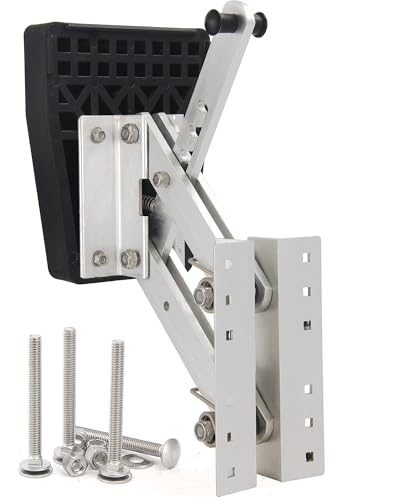
Designed for 2-stroke motors 7.5–20 HP with a maximum weight of 52 kg (115 lbs). Features anodized aluminum construction and a solid polypropylene mounting board, with a lift range of about 13.38 inches. Best for: small to medium powerboats and yachts needing a robust, corrosion-resistant solution. Limitation: aluminum components may require periodic inspection for galvanic corrosion in salty environments.
Panther 55-0410 Auxiliary Outboard 4-Stroke Motor Bracket

This anodized aluminum bracket accommodates the heavier torque and weight of modern four-stroke engines with a long or short shaft. It offers five vertical running positions and a 2″-thick, extra-wide mounting board plus stainless steel hardware for heavy-duty operation. Best for: boats needing precise motor positioning across varying loads. Caution: may be bulkier, requiring more deck space.
Camoo TSP-1 & TSP-2DP Transom Support Plate Kit

The two-pack kit includes transom plates for top and lower bolt holes, with 3/8″ thickness aluminum. It helps distribute bolt stress and protect the transom when mounting heavier engines today. Best for: ensuring longevity of the transom under higher torque and vibration. Limitation: requires proper hole alignment to universal mounting patterns.
Buying Guide: Key Purchase Considerations
- Engine type and HP range: Select mounts rated for your engine’s horsepower and shaft length (two-stroke vs four-stroke). Some brackets are optimized for 7.5–20 HP, others for heavier four-stroke loads.
- Material and corrosion resistance: Stainless steel and anodized aluminum resist corrosion in saltwater environments. Consider external coatings and maintenance needs.
- Mounting footprint and weight: Ensure the mounting area on the transom is compatible with the board size and that the weight of the assembly won’t exceed transom capacity.
- Adjustability and lift range: Brackets with multiple positions or adjustable height help achieve optimal engine alignment and balance under varying loads.
- Compatibility with mounting patterns: Transom plates and brackets should align with common bolt hole patterns used by major manufacturers.
- Installation effort: Some kits include mounting plates or quick-release features; check for required tools and included hardware.
- Maintenance considerations: Look for easy-to-clean surfaces and replaceable fasteners to extend life in harsh marine environments.
FAQ
- What mounting board is best for a small two-stroke engine? A: Look for a heavy-duty aluminum or stainless-braced bracket designed for 7.5–20 HP two-stroke engines, such as Mojiate options with reinforced frames and adjustable positions.
- Do transom plates help long-term engine mounting? A: Yes. Transom plates distribute stress from mounting bolts and can prolong transom life when using heavy engines.
- Can these mounts fit different hulls? A: Many mounts use standard bolt patterns, but always verify bolt hole spacing and deck clearance for your specific boat model.
- Are stainless steel mounts better for saltwater use? A: Stainless steel offers excellent corrosion resistance, but ensure proper maintenance to prevent galvanic corrosion when paired with other metals.
- Is adjustable height important? A: Yes. Adjustable height improves engine alignment, reduces vibration, and helps achieve optimal trim for varying loads and water conditions.
- Should I choose an aluminum mount over stainless? A: Aluminum mounts are lighter and resistant to corrosion in freshwater; stainless is stronger and more durable in harsh environments, but heavier and may require more maintenance.