Answering the demand for effective paint oxidation removal, this guide compares top-rated products that restore color, gloss, and clarity. The selections are best for DIY enthusiasts, hobbyists, and detail pros looking to correct oxidation, heavieswirl marks, and dull finishes on a variety of automotive paints. Below is a quick summary table of the featured products, including their primary use and who they’re best for.
| Product | Best For | Notes |
|---|---|---|
| Meguiar’s Mirror Glaze M105 | Heavy defects and deep swirls | Pro-level cutting with high gloss finish |
| Chemical Guys C4 & P4 Combo | Defects and high-gloss refinement | Two-step corrective polishing kit |
| Oxide Reducing Emulsion (OxideOff) | Faded, oxidized finishes and dull headlights | DIY-friendly and easy to apply |
| Carfidant Scratch Repair and Swirl Remover | Light to moderate swirls and oxidation | All-in-one polishing and restoration |
| 303 Products Compound | Challenging surface defects | Effective on single-stage and base-clear paints |
Meguiar’s Mirror Glaze M105 Ultra-Cut Compound

Meguiar’s M105 Ultra-Cut is designed for defect removal with a fast-cutting action. It targets moderate to heavy scratches, oxidation, and swirl marks while minimizing further swirling because of micro-abrasives that finish with a high-gloss look. Best for paint finishes that require significant correction before polishing. Choose this if you face deep defects and need rapid defect removal. Caution: may dust significantly and requires thorough follow-up with a finishing polish to maximize depth and clarity.
Chemical Guys C4 & P4 Clear Cut Correction Compound and Precision Paint Perfection Polish Combo
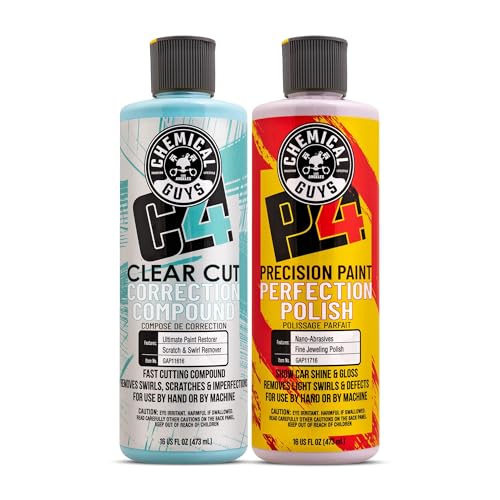
This 2-step kit combines C4 Clear Cut Compound for fast defect removal with P4 Precision Polish for a high-gloss finish. It’s ideal for those who want an efficient correction process and a show-quality result. Best for buyers who need a balanced combination of cutting and polishing in a single purchase. Limitation: results depend on technique and pad selection; follow with a dedicated wax or sealant for protection.
Oxide Reducing Emulsion (OxideOff)
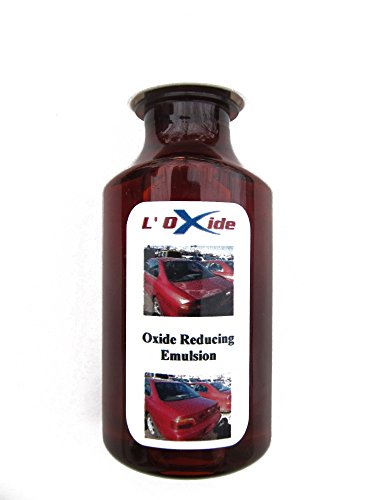
OxideOff offers a simple DIY option to restore faded or sun-damaged paints, peeling clear coats, and dull plastics. It emphasizes ease of use and does not require heavy polishing. Best for beginners or light restoration projects where minimal abrasion is preferred. Caution: its performance is best with careful surface preparation and may require follow-up protection to maintain results.
Carfidant Scratch Repair and Swirl Remover

Carfidant offers an all-in-one solution to remove light scratches, swirls, and oxidation while restoring gloss. It’s suitable for users seeking an accessible product that delivers noticeable improvements without specialized tools. Best for casual detailers and vehicles with minor defects. Limitation: performance declines with deeper scratches or extensive clear coat damage; may require a follow-up polish for optimal depth.
303 Products Compound

303 Products Compound is a strong option for removing 1500-grit scratches and restoring clarity on both single-stage and base-clear finishes. It’s best for vehicles with older or more oxidized paint requiring significant correction. Choose this when faced with tough defects, but plan for a polish step to refine the finish after defect removal. Caution: ensure compatible with your paint system to avoid haze or minor marring.
Buying Guide: How to Choose the Right Oxidation-Removal Product
- Defect severity: For heavy swirls and oxidation, a stronger cut compound like M105 or a two-step kit (C4 & P4) may be necessary. For lighter oxidation, a one-step polish like Carfidant or 303 can suffice.
- Paint type: Confirm compatibility with single-stage, basecoat clear, or ceramic-coated finishes. Some products work across many systems, others are more limited.
- Finish goals: Decide between cutting (defect removal) and polishing (gloss and depth). A combined approach often yields balanced results.
- User experience: Beginners may prefer non-abrasive options or kits with clear directions, while seasoned detailers may opt for high-cut compounds for faster corrections.
- Protection: Plan to seal or wax after correction to preserve the newly restored finish and retard future oxidation.
FAQ
- What is the difference between a cutting compound and a finishing polish?
A cutting compound removes defects by abrading the surface, while a finishing polish refines micro-marring and adds clarity and gloss. - Can I use oxidation-removal products on antique or vintage paints?
Yes, but test on an inconspicuous area first and ensure the product is compatible with the paint type. - Do these products work on headlights and plastic trim?
Some formulations are suitable for headlights and plastics, but check product descriptions for material compatibility. - Should I seal the paint after oxidation removal?
Yes, applying wax, sealant, or ceramic coating helps protect the corrected surface from future oxidation. - Is one-step correction enough for severe paint oxidation?
Often not; consider a two-step approach (defect removal followed by refinement) for best results.