When choosing a piston air compressor or vacuum pump, the best options balance airflow, vacuum capability, reliability, and maintenance needs. This guide highlights five strong choices across consumer and light industrial uses, focusing on models that perform well with oil-free operation, robust construction, and solid airflow for dispensing, ventilation, and small-scale pumping tasks. Designed for buyers seeking dependable equipment, these selections fit workshops, labs, and on-site projects where compact size and steady performance matter.
Summary at a glance: the top five products covered here are selected for different use cases—oil-free operation, continuous running, high vacuum capability, and rugged construction. The table below outlines each product’s core strengths to help you compare quickly.
| Product | Best For | Key Benefit |
|---|---|---|
| Piston Air Compressor/Vacuum Pump (Gast, 1/6HP) | Small workshop, light industrial | Oil-less, low noise, compact footprint |
| Thomas/Gardner Denver THOMAS 0.1 HP | Food/medical dispensing, ventilation | Oil-free, continuous operation, rocking piston |
| Oil-Free Air Compressor Motor, 7CFM (Pinelicorn) | Industrial tasks, small shop | High power, corrosion-resistant aluminum, copper motor |
| Medo LA-120 Piston Air Pump | Onsite wastewater, aquaculture, liquid mixing | Die-cast piston, UL outdoor use |
| Jiabailie 110V Mini Diaphragm Lab Vacuum Pump | Laboratory, research, quiet operation | Oil-free, dual cooling, robust build |
Gast 1/6HP Piston Air Compressor/Vacuum Pump

The Gast unit combines piston-driven air compression with vacuum generating capability in a compact 1/6 HP design. Features include oil-less lubrication, 115 VAC operation, and dual 1/4″ NPT ports for intake and outlet. It delivers a Free Air CFM around 1.5 at 0 PSI, with vacuum performance down to 26″ Hg, and a relatively quiet 75 dBA sound rating. Best for small shops or applications requiring both compressed air and light vacuum without oil maintenance. Caution: The smaller size limits high-demand continuous runs; consider duty cycles when planning long-term use.
- Inlet/Outlet: 1/4″ NPT
- Max. Vacuum: 26″ Hg
- Cylinder: Cast Iron
- Phase: 1
Thomas/Gardner Denver THOMAS 0.1 hp Piston Air Compressor
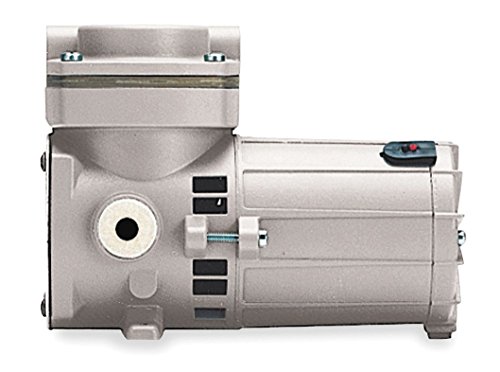
This compact Thomas/ Gardner Denver model combines air pressure and vacuum functionality using a rocking piston design, known for higher flow at given pressure compared with typical reciprocating pistons. It operates oil-free and is suitable for continuous use in food/beverage dispensing or basic ventilation tasks. Best for compact or lab environments needing oil-free operation and straightforward installation. Limit: This is a smaller system; anticipate lower max vacuum versus larger industrial pumps.
- Oil-Free Operation
- Rocking Piston Design
- Voltage: 12V DC (as listed)
Pinelicorn Oil-Free Air Compressor Motor (7CFM)

This 7 CFM oil-free piston vacuum pump combines aluminum alloy construction with a pure copper motor for cooler, more efficient operation. The unit emphasizes strong pumping power and corrosion resistance, suitable for continuous tasks that require dependable air or vacuum flow. Best for environments needing durable, heat-tolerant performance with low maintenance. Limitation: Some users may require additional cooling or enclosure in hot environments to maintain performance.
- Oil-Free Pump
- Aluminum Body, Copper Motor
- High Efficiency
Medo LA-120 Piston Air Pump

The Medo LA-120 is positioned for demanding onsite wastewater, aquaculture, and liquid mixing tasks. Its die-cast piston construction and UL outdoor approval indicate rugged, weather-tolerant design. Best for outdoor or harsh-site applications that require a sturdy piston pump with reliable outdoor capability. Limit: Check for compatibility with liquid handling systems or coatings when integrating with existing setups.
- Die-Cast Piston
- UL Approved for Outdoor Use
- Onsite and Liquid Handling Use
Jiabailie 110V Mini Diaphragm Lab Vacuum Pump

This 110V unit emphasizes quiet operation with an oil-free diaphragm design and dual cooling fans. It’s well-suited for laboratory work, precise vacuum tasks, and quiet environments. Best for labs or small workshops needing silent operation and pure oil-free pumping. Limitation: Diaphragm pumps typically have meeting-point vacuum limits compared with larger piston systems; check required vacuum levels for your application.
- Oil-Free Diaphragm Design
- Dual Cooling Fans
- Low Noise
Buying Guide
What size and type should I choose for my project?
Consider required airflow (CFM) and vacuum (Hg) for your tasks. Oil-free designs reduce maintenance but may have different duty cycles. For continuous use, select units with higher reliability and better heat management.
Is oil-free operation important for my application?
Oil-free pumps reduce contamination risk in labs, medical, and food-grade environments. They typically require less maintenance but verify material compatibility with your media and ambient conditions.
What environment will the device operate in?
Outdoor or harsh environments benefit from UL or outdoor ratings and rugged housings. Indoor or lab spaces benefit from quieter operation and compact footprints.
What are the essential safety and installation considerations?
Check voltage compatibility, cooling requirements, and space for mounting or enclosure. Ensure adequate ventilation and choose models with protective features for high-temperature operation.
How do I compare reliability and service needs?
Look for robust materials (cast iron cylinders, aluminum bodies), proven piston types, and simple maintenance. Consider brands with established support networks or clear replacement part availability.
FAQ
- What is the difference between piston and diaphragm pumps?
- Do oil-free pumps require special maintenance?
- Can these pumps handle continuous operation?
- Which model is best for a quiet workspace?
- What should I consider for outdoor installations?
- Are these compatible with standard 110V outlets?
Piston pumps use reciprocating pistons to compress air and generate vacuum, often offering higher flow and vacuum at a given size. Diaphragm pumps use a flexible membrane and typically run quietly with oil-free operation, suitable for lab settings.
Oil-free pumps are designed to minimize lubrication needs, but routine checks for seals, hoses, and electrical connections are still important.
Some models are designed for continuous use; verify duty cycle ratings and cooling features for the specific model you choose.
Diaphragm and smaller oil-free piston units typically run quieter, making them suitable for labs and offices.
Look for UL outdoor ratings, weather-resistant housings, and corrosion-resistant materials to ensure durability in exposed environments.
Most listed units use 110V AC supplies; check your locale and outlet availability for compatibility.