Finding the right fuel tank for a racing or performance street build depends on capacity, material, and reliability. This guide highlights five top options, explaining who they’re best for and why each stands out. It’s ideal for builders, track-day drivers, and hot-rod enthusiasts seeking durable, lightweight aluminum tanks with reliable sender units and anti-slosh features.
| Product | Capacity | Material | Best For |
|---|---|---|---|
| Parts-Diyer 20 Gallon Aluminum Fuel Tank | 20 gal / 80 L | Aluminum | Racers needing large capacity with dual outlets |
| VP Racing Patriotic Jug | 5.5 gal | Plastic | Non-fuel storage and transport of fluids |
| munirater 5 Gal Universal Fuel Cell | 5 gal / 20 L | Aluminum | Compact street/strip builds |
| AutoForever 17 Gal Aluminum Tank | 17 gal | Aluminum | Large-capacity street/track use |
| MOTORHOT 8 Gal Fuel Cell | 8 gal / 30 L | Aluminum | Balanced size and capacity for drift and track |
20 Gallon Aluminum Fuel Tank With Level Sender

Best for high-capacity race setups that require robust construction and integrated level sensing. This tank uses high-grade aluminum for light weight and durability, includes anti-slosh features, and offers dual -10 outlets and dual vent outlets for flexible plumbing. The 19.75″ L x 24″ W x 10″ H footprint supports wide passenger or engine bay layouts. It’s suited for racers who need a large reserve without sacrificing durability.
Who it’s best for: drivers building endurance race cars or street-legal track cars that need a sizable fuel reserve and reliable level indication. Why selected: combined capacity, dual outlets, and an easy-to-clean, corrosion-resistant design. Caution: ensure mounting and clearance accommodate the 24″ width in tight engine bays.
VP Racing 5.5 Gal Patriotic Motorsport Jug

Best for auxiliary storage and material handling beyond fuel use. This plastic jug is flexible for non-fuel applications like storing recyclable automotive fluids, water, or feed. Its reinforced corners reduce cracking risk, making it a dependable multipurpose container in garages, farms, or workshops. The design prioritizes durability and a tight seal for off-road or pit-side needs.
Who it’s best for: hobbyists and pit crews needing a versatile container for non-fuel storage or dispensing. Why selected: versatility and reinforced construction. Caution: not intended for fueling fuel or kerosene in active motor vehicles.
Munirater 5-Gallon Universal Fuel Cell

Best for compact, lightweight race or drift builds that still require a functional level sender. This 5-gallon aluminum fuel cell is polished for a clean look and includes dual outlets and vent outlets on top. Its smaller size makes it easier to fit in tight engine bays or trunk-mounted setups while still delivering dependable fuel delivery and anti-slosh protection.
Who it’s best for: smaller track cars, street/race hybrids, or projects with limited space. Why selected: balance of capacity, aluminum construction, and sender compatibility. Caution: limited capacity means frequent refueling on longer race events.
AutoForever 17 Gallon Aluminum Fuel Tank
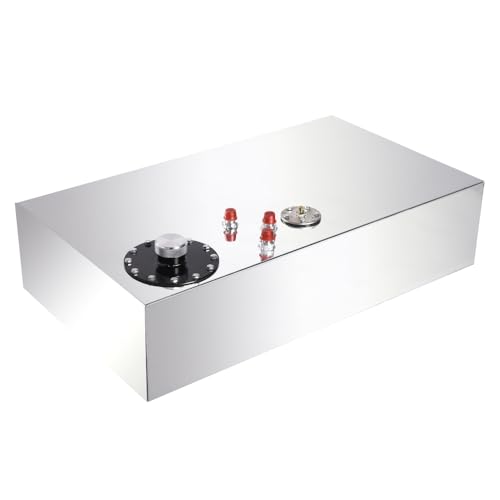
Best for racers needing sizable capacity without an oversized footprint. This 17-gallon aluminum tank emphasizes protection, durability, and rust resistance, with a level sender for accurate monitoring. The large dimensions suit front or rear layouts that can accommodate longer tanks while keeping mass distribution manageable.
Who it’s best for: ambitious build projects that demand higher fuel reserves for endurance or longer sprint formats. Why selected: high-capacity aluminum tank with level sender, suitable for robust applications. Caution: longer length requires careful mounting alignment to avoid interference with other components.
MOTORHOT 8 Gal Aluminum Fuel Cell

Best for balanced performance cars that need solid capacity with compact dimensions. This 8-gallon aluminum fuel cell provides 0-90 ohm sender compatibility and dual -10 outlets/vents, enabling flexible plumbing and easy integration into street or drift setups. The aluminum construction promises durability and rust resistance.
Who it’s best for: drivers wanting a mid-sized tank that fits snugly in moderate-sized trunks or under-bonnet spaces. Why selected: reliable sender compatibility and corrosion resistance. Caution: ensure the 15″ L x 12.5″ W footprint fits the intended space before purchase.
RainMan S 15 Gallon Slim Fuel Cell

Best for hot rod or drift builds needing a slim profile without sacrificing capacity. This 15-gallon aluminum tank emphasizes universal application across hot rods, street cars, and SUVs. The sender facilitates fuel monitoring, while the slim design helps fit longer, narrow trunks or underbody areas.
Who it’s best for: enthusiasts seeking a low-profile, high-capacity option for tight spaces. Why selected: slim footprint with aluminum durability and level sensing. Caution: verify mounting tabs dimensions to ensure a secure fit in tight compartments.
Buying Guide: Key Purchase Considerations
Capacity vs. space: Larger tanks increase range but require more space and weight management. Measure your mounting area and ensure clearance for outlets and vents.
Material and durability: Aluminum tanks offer corrosion resistance, light weight, and strength. Look for anti-slosh features and robust caps for safe operation.
Level sender compatibility: If monitoring fuel level is important, verify the sender’s ohm range (0-90 Ohm is common) and wiring access.
Outlets and vents: Dual outlets and vent arrangements affect fuel routing and venting. Ensure compatible plumbing with your fuel system and pumps.
Installation and maintenance: Easy-to-clean designs, removable caps, and clear mounting dimensions simplify installation and future service.
Frequently Asked Questions
- What should I consider when choosing a fuel cell for racing?
- Are aluminum fuel tanks more durable than plastic?
- What is a level sender, and why is it important?
- Can I use any tank for track days?
- How do I know if a tank fits my engine bay?
- Is a bigger tank always better for racing?
Look at capacity, material, sender compatibility, and fit within your vehicle’s layout. Consider drag, weight distribution, and available space.
Yes, aluminum tanks are generally more durable, corrosion-resistant, and lighter, but may cost more and require careful mounting.
A level sender provides real-time fuel level data, helping manage pit stops and avoid running out of fuel mid-race.
Not all tanks are designed for racing. Choose approved materials, proper venting, and appropriate capacity for your event rules and safety standards.
Measure length, width, and height of the mounting area, plus verify outlet and vent positions align with hoses and mounts.
More capacity reduces pit stops but adds weight. Balance capacity with vehicle handling and fueling strategy.