If you’re upgrading an older engine or swapping in a modern cam, a roller cam conversion kit helps you gain better reliability, smoother operation, and improved power without a full engine rebuild. This guide highlights five top roller cam and conversion kits, explaining who each is best for and why. It’s ideal for DIY enthusiasts, street-trooper builds, and shop projects that aim for reliable power gains with installable precision.
Quick reference table for the selected products:
- Ford Racing M6253A50 — Best for 5.0/302 Ford builds requiring a straightforward hydraulic roller conversion kit.
- COMP Cams 12-600-8 Thumpr (Chevy SBC) — Best for Chevy small-block builds seeking a lopey idle and strong mid-range torque.
- COMP Cams 35-421-8 Xtreme Energy (Ford 289/302/351W) — Best for Ford street performance with balanced torque and RPM range.
- Sloppy Mechanics Stage 2 (LS Gen 3/4 4.8L-5.3L) — Best for modern GM LS engines needing robust cam and lifter kit with complete package.
- Michigan Motorsports LS Cam Sensor Conversion Kit — Best for upgrading older LS sensor setups to modern 58X front-mount signaling.
Ford Racing M6253A50 Roller Camshaft Conversion Kit

The Ford Racing M6253A50 kit is designed for 1985–2001 302 engines and fits 1994–1997 351W engines. It includes hydraulic roller lifter components and essential hardware to enable a smooth conversion for Ford small-block builds. Best for classic Ford enthusiasts seeking a straightforward swap with reliable hydraulic action and a compact installation footprint.
Best for Ford fans performing a swap on early 5.0/302 or 351W platforms looking for an established conversion kit.
Why selected This kit provides the core lifter and hardware needed for a hydraulic roller conversion, simplifying the upgrade path in popular Ford engines.
Caution Compatibility is engine-model specific; verify that your block and bolt pattern align with the kit’s hardware before purchasing.
COMP Cams 12-600-8 Thumpr Chevy SBC Kit
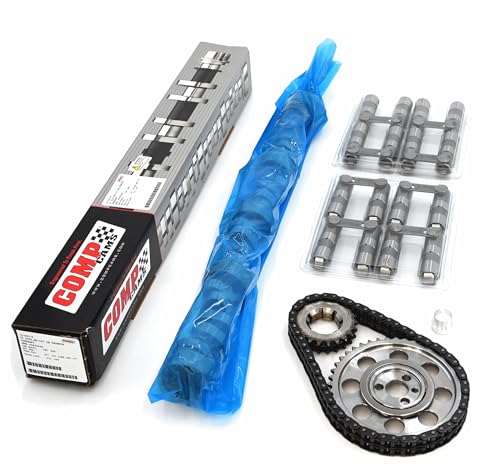
Includes the Thumpr hydraulic roller camshaft, Retro-Fit lifters, and a billet timing set. Designed for SBC engines with a lopey idle and robust mid-range torque. This kit is well-suited for street-driven Chevy small-block builds that want a noticeable performance increase without sacrificing daily drivability.
Best for Chevy 283/305/327/350/400 builds seeking a bold cam with a distinctive idle and strong throttle response.
Why selected It combines a modern hydraulic roller cam with reliable lifters and a precise timing set, offering a cohesive upgrade path for popular Chevy engines.
Caution The lope can be pronounced at idle; ensure your exhaust, tune, and drivetrain can handle the increased torque output.
COMP Cams 12-600-8 Thumpr Chevy SBC Kit (Lifters Included)
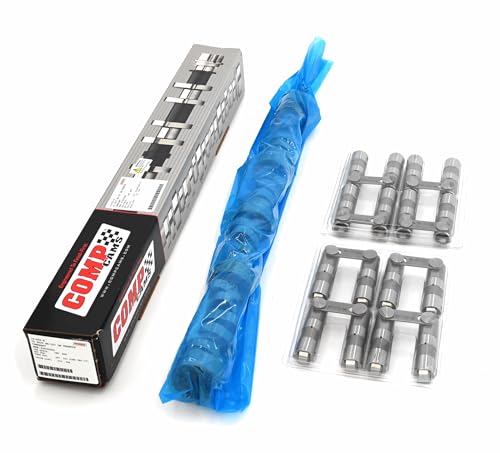
This kit mirrors the Thumpr lineup for SBC applications, delivering a complete cam and lifter package. It features the same aggressive 227° intake and 241° exhaust duration @ .050″ with a 107° LSA, designed to produce a signature Thumpr lope and quick throttle response while maintaining strong mid-range power.
Best for SBC owners wanting a complete kit with reliable lifters for a street-smart build.
Why selected The kit offers a balance of sound, power, and drivability in a single package optimized for straight-forward installation.
Caution Expect a louder idle; ensure drivetrain components are ready for higher torque output in a daily-driver setup.
E1840P Sloppy Mechanics Stage 2 Camshaft Kit
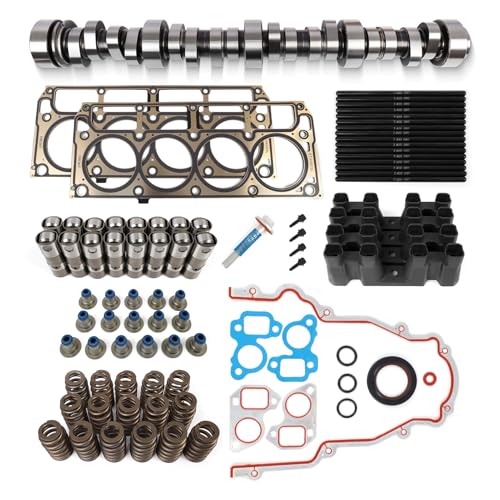
Designed for 1999–2013 Chevy/GMC LS-gen 3/4 4.8L and 5.3L Vortec engines, this Stage 2 kit includes a cam, lifters, trays, pushrods, gaskets, and more. It emphasizes a broad RPM range and robust mid-range power, with a 0° phaser limit option and a cam profile that supports street performance without sacrificing reliability.
Best for LS-based trucks and SUVs seeking a full upgrade package with a focus on higher RPM potential and drivability.
Why selected The kit provides a complete installation with matched lifters and supporting components suitable for LS platforms needing a capable performance bump.
Caution Fitment must match LS family specifics; verify lifter and pushrod lengths match your engine’s requirements.
TSP Texas Speed Stage 3 V2 Camshaft Kit (5.3L Gen V)

Specifically designed for 2014–2018 5.3L Gen V LS engines, this kit emphasizes mid-range and top-end gains, with a comprehensive installation kit included. It aims to deliver significant horsepower and torque while preserving street drivability and reliability for modern GM platforms.
Best for Gen V 5.3L trucks and muscle cars where a strong mid-range punch and sustained RPM capability are priorities.
Why selected It pairs an aggressive cam profile with a complete installation bundle, simplifying the upgrade for a Gen V LS motor.
Caution Higher-lift cams can require upgraded springs and proper valvetrain checks; confirm compatibility with your current valvetrain components.
Michigan Motorsports LS1 to LS2 Cam Sensor Conversion Kit

Combines an LS2/LS3 timing cover with integrated cam sensor provision, 58X cam gear, LS2/LS7 timing chain, gaskets, ARP bolts, and an adapter harness. This conversion kit simplifies upgrading older LS sensors to modern 58X signaling, improving ECU compatibility and tuning options for LS swaps or upgrades.
Best for LS swaps or updates needing modern cam signal compatibility without a full engine rebuild.
Why selected It offers a clear path to modern cam signaling and improved ECU integration, particularly for custom builds or retrofits.
Caution This is primarily a sensor/conversion kit; ensure you still select compatible camshaft and lifters if you are upgrading multiple components.
Buying Guide: Roller Cam Conversion Kit Essentials
- Engine compatibility Confirm the kit is designed for your engine family (Ford, GM, Chevy SBC, etc.), model year, and displacement.
- Included components Look for a complete package (camshaft, lifters, timing set, gaskets, pushrods) when possible to minimize separate purchases.
- Intended use Choose based on drive style: street/torque-rich likes lopey idle vs. track-focused high-RPM power.
- Valvetrain requirements Some cams require upgraded springs, pushrods, or retainers; verify compatibility with your current valvetrain.
- Installation considerations Assess your tooling, space, and mechanical know-how. Some kits are straightforward swaps; others demand engine teardown or machining.
- Warranty and support Check for warranties, especially if a professional install is involved, and confirm which installations qualify.
- Tuning and exhaust After installing a cam, plan for ECU tuning and, if necessary, exhaust upgrades to maximize gains and avoid drivability issues.
Frequently Asked Questions
- What is a roller cam conversion kit? A kit that enables or upgrades a roller camshaft setup by providing the cam, lifters, timing components, and necessary hardware for compatible engines.
- Do I need new lifters with a cam upgrade? Often yes; many kits include retro-fit or compatible lifters, but verify compatibility with your engine block and choose the right lifter type.
- Will a cam upgrade affect my fuel economy? Cam upgrades can improve power and throttle response, sometimes changing an engine’s efficiency. Tuning and driving style influence actual results.
- Is tuning required after installation? Yes. A cam change typically requires ECU recalibration or tuning to optimize air-fuel, timing, and torque curves.
- Can I install a roller cam kit at home? It depends on your mechanical skill and tool availability. Some kits are straightforward, while others require professional service.
- What is LSA and why does it matter? Lobe Separation Angle (LSA) affects overlap, idle quality, and torque. A tighter LSA can increase lope and low-end torque, while a wider LSA can smooth idle and improve top-end power.