When choosing roll cage padding, the top priority is effective impact absorption and driver protection. This guide highlights five solid options suited for common racing and off-road setups, focusing on high-density foam, offset hole designs, and fit ranges for 1-1/2″ to 1-3/4″ tubing. Ideal buyers include drag racers needing tight protection around the driver, off-road enthusiasts seeking reliable fire-retardant padding, and shop setups that require bulk padding for multiple bars. Below, compare each product’s strengths, best-use cases, and notable limitations to help you decide quickly.
| Product | Best For | Key Benefit |
|---|---|---|
| Speedway Motors Red Roll Bar Padding Set of 6 | Racers needing bulk padding | High-density foam with offset hole for driver-focused protection |
| Speedway Motors Black Foam Roll Bar Padding | Performance cars with 1-5/8″–1-3/4″ tubing | Maximized driver protection via offset hole |
| JEGS Roll Bar Padding | DIY racers and shop use | Offset hole for driver-side protection; fits 1″–1-3/4″ |
| Allstar Performance Roll Bar Padding, Red | Multiple bars needing consistent padding | 3-pack with closed-cell foam for moisture resistance |
| Longacre Roll Bar Padding, Mini | Compact installations | Mini, low-profile 36″ padding for tight spaces |
Speedway Motors Red Roll Bar Padding Set of 6

Best for teams needing bulk protection along multiple bars, this set uses high-density cellulose foam to absorb impact energy. The offset center hole positions padding toward the driver for enhanced head and body protection in racing environments. Designed to fit 1-5/8″ to 1-3/4″ OD tubes, it covers common roll cage sizes. Choose this if you run a small-to-mid-sized fleet or a DIY garage with several bars to pad. A limitation is that bulk packs may include a uniform color option if you want mixed colors.
Speedway Motors Black Foam Roll Bar Padding

Best for drivers seeking driver-side emphasis with a simple, reliable 36″ pad that fits 1-5/8″–1-3/4″ OD tubes. The padding’s high-density foam provides solid energy absorption, and the offset hole design keeps the thicker portion near the driver for added protection. This option is better for single-vehicle installations or teams replacing padding in stages. Limitation: color is limited to black, which may not match all livery schemes.
JEGS Roll Bar Padding
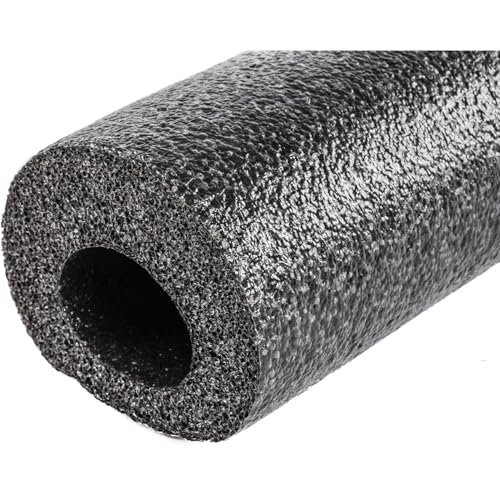
Choose this if you need a flexible padding option for 1″ to 1-3/4″ tubing with an offset hole to improve driver protection. The design emphasizes flame retardancy and high density, making it well-suited for clubs and amateur race teams that value safety without overpaying. A caution: trim adjustments may be required for snug fits on some tubing brands.
Allstar Performance Roll Bar Padding, Red, 36 in Long

Best for pluggable, multi-bar padding in a single kit, this red 3-pack uses closed-cell foam to avoid moisture absorption. The smaller packaging dimensions help with storage in workshops. Best for pro-style builds where consistent color and density across bars matter. Limitation: density specifics are not stated, so cross-check fit with your tube size when precise foam stiffness is needed.
Longacre Roll Bar Padding, Mini

Best for tight installations or where space is at a premium, these 36″ mini pads fit 1-1/2″ to 1-3/4″ tubes in a compact form. The black finish blends with most roll cages and reduces visual clutter in the cockpit. A potential limitation is that the mini design may offer less bulk protection on higher-energy impacts compared to larger-diameter pads.
Buying Guide
- Tube compatibility: Confirm exterior diameter (OD) range 1-5/8″ to 1-3/4″ for most options. Some pads fit 1″ to 1-3/4″ with trimming costs; verify your tubing before purchase.
- Foam density: Higher density usually means better energy absorption. Look for high-density cellulose or closed-cell foam to avoid moisture absorption and maintain shape after multiple impacts.
- Offset hole design: Padding with an offset hole directs more padding toward the driver, improving head and torso protection. This is a common and valuable feature in racing padding.
- Color and kit size: Black or red pads are common; consider color to match vehicle livery. Kits range from 3-pack to 6-piece sets; select based on how many bars you need to pad.
- Fire safety: Some pads emphasize fire retardancy. If your application involves potential ignition risk, prioritize pads advertising fire retardant or high-heat tolerance features.
- Durability and moisture: Closed-cell foams resist moisture and sweat better than open-cell foams. This matters for long-term use and maintenance.
- Installation notes: Some pads may require trimming or specific seating to fit securely. Factor installation time into your plan.
FAQs
- What is the advantage of an offset hole? It positions more padding toward the driver for enhanced protection during a crash or sudden maneuver.
- Do these pads fit all roll cages? Most are designed for standard 1-5/8″ to 1-3/4″ tubes. Always measure your tube OD before ordering.
- Are closed-cell foams better than open-cell? Yes, closed-cell foams resist moisture and maintain structure better over time, reducing padding degradation.
- How many pads do I need? A typical kit for a full roll cage includes padding for multiple bars; count each exposed tube and plan for a few extra inches to cover joints.
- Can I trim pads to fit? Some models allow trimming; follow the manufacturer’s guidance to preserve safety features and integrity.
- Is fire retardant padding necessary? It can be beneficial in garages or rally environments where fire risk exists, though many standard pads provide adequate protection for typical track use.