Traveling in an Airstream demands dependable off-grid power that’s flexible enough to mount on curved roofs and lightweight enough for easy installation. The following five solar products are chosen for compatibility with Recreational Vehicles (RVs) and campers, offering a balance of efficiency, portability, and durability. Read on for practical details and a buying guide to help compare options for your next road trip.
| Product | Brand | Type | Approx. Power | Notes |
|---|---|---|---|---|
| Renogy Flexible Solar Panel 100W | Renogy | Flexible Monocrystalline | 100 W | Ultra-thin, curved-surface friendly |
| ECO-WORTHY 200W Solar Panel Kit | ECO-WORTHY | Monocrystalline Panel Kit | 200 W | Kit with PWM controller, versatile for RVs |
| Renogy 400W Portable Solar Panel Blanket | Renogy | Foldable Solar Blanket | 400 W | Lightweight, versatile installation |
| Renogy Solar Panels 200W N-Type | Renogy | N-Type, 24V | 200 W | Compact and efficient for tight spaces |
| BALDR Solar Panels 200W | Baldr | Folding Portable Kit | 200 W | USB-C PD and USB-A outputs for direct charging |
Renogy 100W Flexible Panel

The Renogy 100W Flexible Panel is designed for curved or irregular surfaces, making it suitable for Airstream roofs that are not flat. The panel’s semi-flexible construction reduces stress on mounting areas and blends with the vehicle’s profile. It is exceptionally lightweight—about 70% lighter than rigid panels—facilitating easier transport and installation. Its ultra-thin lamination means a very low height when laid flat, creating a stealthy solar setup that remains unobtrusive on a roofline. This panel typically pairs with charge controllers suitable for off-grid RV systems, delivering dependable daytime energy for lighting, charging devices, and small appliances.
Key considerations include its durability against road vibration and weather exposures, as well as compatibility with existing battery banks and charge controllers. While flexibility offers mounting advantages, users should verify edge layers and seams for long-term resilience. The panel is best used as a supplementary or auxiliary source in RV configurations rather than a sole power supply for high-demand loads.
ECO-WORTHY 200W Solar Panel Kit

The ECO-WORTHY 200W kit provides a robust entry point for RV installations needing more daily energy. It includes high-efficiency monocrystalline cells and a 30A PWM charge controller, which suits off-grid charging for RV batteries, campers, and similar setups. The panel’s corrosion-resistant aluminum frame is designed for decades of outdoor exposure, and it can withstand strong wind and snow loads, improving reliability in variable climates. An IP65-rated junction box adds protection against dust and water, contributing to a longer service life in rugged travel environments.
Practical considerations for Airstreams include ensuring the kit’s mounting hardware is compatible with roof materials and that the system’s voltage and current ratings align with the vehicle’s battery bank. The kit’s size (approximately 35.2 by 23.1 inches by 1.37 inches) is a balance between portability and daily output, making it a solid option for mid-size power needs on longer trips or in areas with plentiful sun.
Renogy 400W Portable Solar Panel Blanket
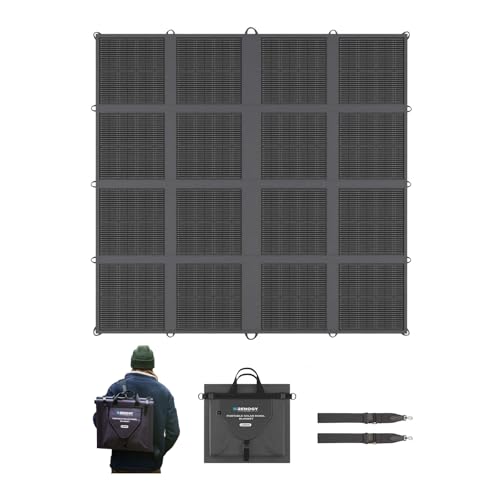
The Renogy 400W Solar Panel Blanket is a foldable, lightweight option designed for mobility and space-saving storage. Its 16-fold design allows flexible deployment, whether stretched across a roof, draped over a shade structure, or spread on the ground for max sun exposure. This panel leverages N-Type cells for higher efficiency (up to about 25%), enabling faster energy capture in limited roof space or during early morning and late afternoon sun. It suits RV enthusiasts who want a portable solution that can be moved between camping spots and quickly packed away when traveling.
When considering use on an Airstream, assess the panel’s weight and how it will be stored when not in use. The foldable design helps with portability, but it requires a suitable mounting or stand for stable operation. Pairing with a compatible charge controller and an appropriate battery bank will ensure efficient charging and system longevity for long road trips.
Renogy 200W N-Type Solar Panel

The Renogy 200W N-Type solar panel concentrates on higher efficiency with a 24V system design, making it well-suited for compact Airstream roofs where space is premium. It uses 16BB cell technology, delivering around 25% efficiency, which helps maximize power production in less than ideal sun conditions. The 24V output minimizes current losses and can improve overall system efficiency when paired with compatible 12V and 24V battery banks. Its smaller footprint compared to larger rigid panels makes it a practical upgrade for Class B vans or smaller RVs that still demand substantial daily charging capacity.
Potential considerations include ensuring compatibility with existing charge controllers and battery voltages on your rig, as well as planning for proper air circulation and heat management to prevent efficiency losses in hot climates. This panel is a strong candidate for RVs needing reliable high-performance solar in a constrained roof area.
BALDR 200W Folding Portable Kit
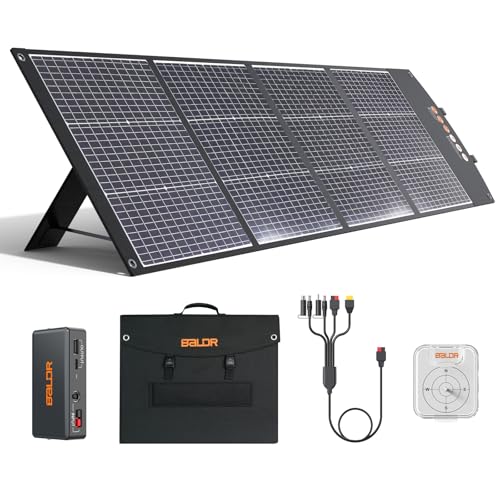
BALDR’s 200W folding solar kit is designed for easy transport and setup, making it a practical choice for RV travelers who want a portable, ready-to-go charging solution. It includes a 6-in-1 cable for broad compatibility with popular portable power stations, including Jackery, EcoFlow, Bluetti, and more. The kit also features USB-C PD60W and USB-A outputs for direct charging of mobile devices, GPS units, cameras, and other essentials, enabling on-the-go power without relying solely on a vehicle battery. The panel itself is light enough to carry and can be deployed quickly at a campsite or off-grid location.
For Airstream use, consider how often you’ll deploy the panel and where you’ll store it during travel. Its portability is a major advantage for multi-stop trips, but ensure you have a compatible power station or battery system to maximize the energy you harvest and store on longer journeys.
Buying Guide: Key Purchase Considerations for Airstream RVs
- Roof Compatibility: Flexible or foldable panels are ideal for curved Airstream roofs. Check mounting options compatible with aluminum siding and roof hardware.
- Power Needs: Assess daily energy usage (lights, fans, small appliances, chargers) and choose a system with adequate wattage and battery capacity for typical travel days with limited sun.
- Efficiency and Temperature: Higher-efficiency cells (e.g., 25%) perform better in hot climates and partial shade. Temperature coefficients matter for summer trips.
- Portability vs. Permanence: Foldable blankets and portable kits offer versatility for temporary setups, while rigid or semi-flexible panels provide long-term roof fixtures.
- Controller Compatibility: Ensure the solar panel kit includes a suitable charge controller or is compatible with your existing MPPT/PWM controller and battery bank (12V vs 24V).
- Durability and Weather: Look for corrosion-resistant frames, IP ratings, and robust junction box protection for outdoor exposure and road conditions.
- Storage Considerations: Foldable panels require space for storage; flexible panels must be protected to prevent bending beyond design limits.
- Maintenance: Check warranty length, cell type, and ease of cleaning to maintain performance over years of RV travel.
- Plan your installation strategy: roof space, mounting hardware, and wiring routes.
- Integrate with a reliable battery system: ensure your battery bank can absorb the panel’s output (e.g., AGM, Li-ion).
- Balance cost, weight, and output: more wattage often means more weight and complexity—find the best fit for your trips.
- Consider expandability: choose panels that can scale with future upgrades or added battery capacity.
- Assess portability needs: if you frequently move campsites, a foldable or portable option may be advantageous.