Looking for a clean, quiet way to power your boat with renewable energy support? These electric outboard motors are designed for saltwater and freshwater use, offering low maintenance, reduced emissions, and compatibility with solar charging setups. This guide highlights five top options, who they’re best for, and practical buying insights. If you want longer trips powered by solar, consider models with high thrust, efficient battery management, and easy-to-hold power curves for steady travel between charging opportunities.
Summary table of selected products
| Product | Thrust / Power | Key Benefit | Best For |
|---|---|---|---|
| Newport NT300 Electric Outboard Motor | 3HP (1300W) | Long range, digital throttle | Saltwater or freshwater adventures |
| Newport NV-Series 55lb (23M1000203) | 55 lb thrust | All-day trolling with LED meter | Prolonged trolling on day trips |
| BODIOO 55lb Thrust Electric Trolling Motor | 55 lb thrust | 8-speed, extendable handle | Kayaks and small boats |
| SJXHRFXY 12V 80lb Thrust Outboard | 80 lb thrust | Long shaft, corrosion-resistant | Kayaks and inflatables |
| VEVOR Electric Trolling Motor | 55 lb thrust | 8 speeds, battery indicator | Kayaks and small boats |
Newport NT300 Electric Outboard Motor

The Newport NT300 delivers 3HP equivalent propulsion with 1300 watts and 110 lb of thrust in a compact 36V package. It features a digital throttle with an LCD display, a 24.6″ shaft, and a 9.8″ 2-blade composite propeller. Trim/tilt positions and field-oriented control provide smooth operation in a range of water conditions. Top speed reaches around 6.5 MPH with a potential range up to 66 miles on a single charge, and a maximum runtime of roughly 30 hours. This makes it a solid pick for anglers and recreational boaters who value quiet, emissions-free propulsion on longer trips. Best for saltwater and freshwater use where a stealthy, low-maintenance motor is desired. Caution: real-world range depends on boat type, weight, and conditions.
Why chosen: Combines solid range with quiet operation and modern electronic controls. Digital throttle helps manage power precisely, which is beneficial when integrating with solar charging setups that rely on consistent energy input.
Newport NV-Series 55lb Thrust Saltwater Transom Motor (23M1000203)

This transom-mounted trolling motor provides 55 pounds of thrust and 12V operation with an LED battery meter, 30″ shaft, 6″ telescoping tiller, and a 3-blade propeller. Eight speeds (5 forward, 3 reverse) support versatile control. Its simple adjustments—mount angle, height, and direction—make it adaptable to various boat shapes. Best for day trips or short expeditions where steady, quiet trolling is valued. Limitation: top speed is around 4 MPH, and actual performance varies with boat characteristics and conditions.
Why chosen: A reliable balance of power and efficiency for saltwater use, plus a visible battery indicator helps monitor solar charging progress for extended outings.
55lb Thrust Trolling Motor For Kayaks And Small Boats (BODIOO)

With 55 pounds of thrust and 8 speeds, this motor is designed for quiet, efficient operation. The 30″ shaft and 6″ extendable handle enhance maneuverability, making it suitable for kayaks and small boats. Best for anglers seeking a compact, controllable motor with reliable performance. Caution: performance depends on load and water conditions; the motor is designed for smaller craft, not larger keel boats.
Why chosen: The extendable handle and adjustable shaft offer flexibility for shallow water or vegetation-rich areas, which can be beneficial when pairing with solar charging on longer excursions.
SJXHRFXY 12V 80lb Thrust Electric Outboard Motor

This model delivers 80 pounds of thrust with an 800W motor, achieving up to 4.34 mph for kayaks and inflatables up to about 13 feet. It features a long shaft design, corrosion-resistant construction, and silent, eco-friendly operation due to battery power. Best for kayaks and small boats needing robust push without fumes. Limitation: heavier propulsion may demand larger battery packs and longer charging cycles when using solar charging.
FXEIPOL 9 HP Outboard (Gas-Pooled) – Not Solar
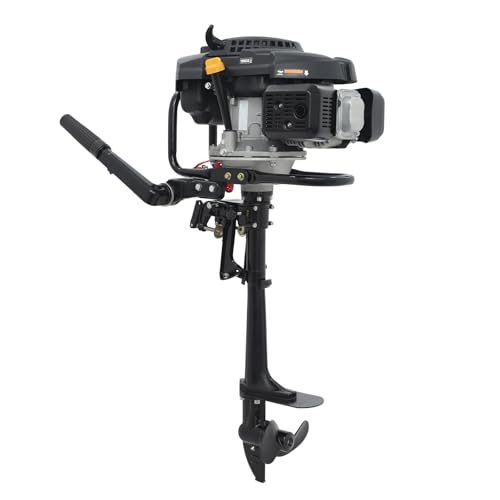
This outboard offers 9 horsepower with a 224cc displacement, designed for 15–20 ft boats, including inflatable and kayaks. It features a tilt function, 360° rotation, and a CDI ignition with forward/reverse capability. Best for larger, flexible craft that require more power than typical electric trolling motors. Caution: this is a gasoline engine, not electric, so it is not suitable for solar-powered setups without a battery-electric conversion.
Newport NV-Series 46lb Thrust Trolling Motor
With 46 pounds of thrust and a 30″ shaft, this saltwater-capable trolling motor balances power with efficiency for kayaks and inflatables. It includes a three-blade propeller and corrosion-resistant construction, making it a solid choice for both saltwater and freshwater applications. Best for boaters who need reliable mid-range thrust for steady travel. Caution: weight and water conditions influence range and speed; not as powerful as higher-thrust models for larger craft.
Buying Guide
What matters most when choosing a solar-compatible electric outboard?
- Power needs: Match thrust (lbs) and motor wattage to boat size, load, and typical cruising speed. Higher power supports longer off-grid trips when solar charging is available.
- Battery and charging: Consider compatibility with solar charging systems, battery type, and run-time. Systems with clear battery indicators help manage solar input and charging cycles.
- Mounting and fit: Shaft length (inches) should suit hull height and transom mounting specifics. Straightforward tilt and mount adjustments improve versatility in varying water conditions.
- Durability: Saltwater builds demand corrosion resistance and durable propellers. For kayak and inflatable use, light-weight designs can be advantageous.
- Control interface: Digital throttles and LED indicators simplify energy management, especially when integrating with solar-powered charging schedules.
Solar integration considerations
To maximize solar-powered boating, pair a suitable electric outboard with a compatible solar charging setup. Look for:
- Efficient battery chemistry and capacity to store daytime solar energy for nighttime use.
- Monitoring tools (battery meters, LCD readouts) to track charge status and runtime.
- Energy management that aligns with typical boating patterns (short trips, day-long outings, or multi-day excursions).
Practical questions buyers ask
- Can I run these motors on solar power alone? Yes, with an appropriate solar charging system and battery setup.
- Which model is best for a small kayak? The 46lb thrust Newport NV-Series or the BODIOO 55lb model offer good balance of power and maneuverability.
- Which is the quietest option? Most electric outboards are quiet; the NT300 emphasizes low noise with its brushless drive.
- Do these work in saltwater? Yes, several listed models are designed for saltwater use; verify corrosion resistance.
- Is gas-powered FXEIPOL a good backup? It offers high power but is not solar-ready and requires fuel, unlike the electric options here.
- What maintenance is needed? Periodic checks of seals, propeller condition, and battery health are common necessities for electric and gas models alike.
FAQ
- Q: Are solar-powered electric outboards safe for long-range trips? A: Yes, when paired with a capable battery system and solar charging plan, they can support extended use.
- Q: Do these motors require special batteries? A: Most use standard marine batteries or specific high-efficiency packs; check manufacturer recommendations.
- Q: Can I upgrade to solar charging later? A: Yes, many users add solar charging setups to existing electric outboards for extended trips.
- Q: Which features improve solar compatibility? A: Battery indicators, efficient brushless drives, and energy management interfaces help optimize solar use.
- Q: Are these motors legal in all waters? A: Regulations vary by location; always verify local boating and propulsion rules.