Answering buyers who need bright, reliable tow bar lighting for safety and compliance: these top picks cover wireless, magnetic, and wired options for different setups. The best choice depends on whether you want wireless convenience, long reach, or high-visibility amber warnings. This guide highlights five strong options and clarifies who each is best for.
Summary of chosen products:
| Product | Best For | Key Benefit | Notes |
|---|---|---|---|
| TowMate TM22G 22″ Wireless Tow Light Bar | Compact towing tasks | Wireless charging and magnetic mount | Good for smaller tow setups |
| TowMate 36 inch Wireless Tow Light Bar | Higher visibility, longer distance | 1,000 ft range, DOT-style lighting | Best for highway towing |
| TowMate 22’’ Lime Light Wireless Tow Light Bar | Budget-friendly wireless option | Includes transmitter and charger | Great value for small rigs |
| TowMate 22″ Wireless LED Tow Light Bar (Lime Green) | Lightweight, portable setups | Battery-powered with magnetic mount | 10+ hours on a charge |
| Lite-It 48″ Tow Light Bar with Flashers | Heavy-duty, versatile wiring | 4-pin and 7-pin sockets, rugged PVC | High durability for frequent use |
TowMate TM22G 22″ Wireless Tow Light Bar

The TowMate TM22G 22″ wireless tow light bar provides stop, tail, and turn signals with a magnetic mounting system. It ships with a wireless charging cord for simple recharging and is designed to withstand demanding towing tasks. Best for compact tow setups where ease of use and fast deployment matter. Limitation: wireless range and charging speed can depend on environmental conditions.
TowMate 36 inch Wireless Tow Light Bar

This 36″ high-visibility LED light bar includes stop, turn, and tail signals, side marker lights, and three DOT center lights for maximum road visibility. With a 7-pin transmitter and approximately 1,000-foot wireless range, it suits longer tows and highway use. Best for: larger trailers or trucks needing extended reach. Caution: wireless interference can affect performance in dense urban areas.
CFLMYYXGS 104 LED 55″ Emergency Warning Light Bar

Designed for heavy-duty warning needs, this 55″ beacon bar uses 104 LEDs for broad visibility and includes 26 flashing patterns with a clear controller. It offers 360° coverage with flood lenses to maximize brightness. Best for tow trucks, construction vehicles, and performance-focused operators. Limitation: primarily a warning beacon; may require additional signaling for legal stop/taillight compliance in some regions.
LUMENIX 70 Inch Emergency Strobe Light Strips

These 70-inch double-row running board strips feature 864 LEDs with 35 strobe modes and weatherproof IP67 protection. They are ideal for construction vehicles or tow rigs needing flexible, high-visibility signaling along the sides and rear. Best for: extended vehicle outlines and emergency signaling. Caution: installation requires attention to power routing and compatibility with vehicle wiring harnesses.
60″ Amber Clear LED Light Bar by YanTech
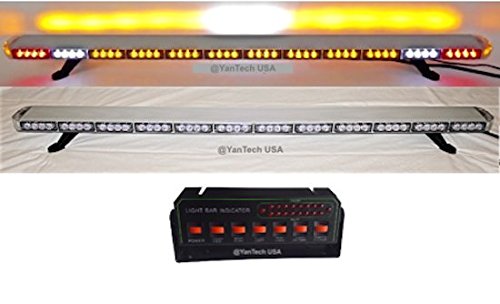
This 60″ amber warning light bar combines 86 LEDs with a robust lens system for long-distance visibility. It features multiple flash patterns and split front/rear signaling for comprehensive warning duties. Best for: large tow trucks needing a strong, wide signal. Limitation: primarily a warning bar; may need additional stop/taillight compatibility checks for specific platforms.
Buying Guide
What to consider when choosing a tow bar light board
Brightness, signal coverage, and weather resistance are primary needs. Wireless versus wired systems affect installation time and flexibility. Magnetic mounts simplify removal, but some setups require permanent mounting for reliability. Look for units with stop, tail, and turn signals, plus any required transmitters or charging accessories.
How to pick based on towing task
- Short to mid-range tows: A compact wireless bar like the TowMate TM22G fits easily onto smaller vehicles.
- Longer tows or highway use: A 36″ bar with extended wireless range offers clearer visibility for approaching drivers.
- Emergency or construction signaling: Consider amber warning bars with multiple patterns and side lighting for full situational signaling.
- Hard-wired versus wireless: If you frequently remove the light bar, wireless options save time; if you tow in remote areas, a wired backup can ensure uninterrupted operation.
Mounting and power considerations
Magnetic mounts provide flexibility but must be strong enough for wind and terrain. Battery-powered models avoid wiring but require battery management. Charging options and the presence of a transmitter or controller will influence setup complexity and ongoing maintenance.
Durability and warranty considerations
Choose rugged materials and weatherproof enclosures for frequent outdoor use. Review surface protection, lumen output consistency, and the ease of replacing LEDs or lenses in case of damage. Warranty terms can indicate long-term support expectations.
Compatibility and installation tips
Ensure the light bar signals are compatible with your vehicle’s existing lighting system. For multi-vehicle fleets, standardized fixtures simplify maintenance. When using 7-pin or 4-pin sockets, verify that the wiring harness aligns with the vehicle’s power and signal requirements.
FAQ
- Q: Do wireless tow light bars require frequent charging?
- A: They include charging cords and typically run for several hours per charge, dependent on usage and battery health.
- Q: Can I use any light bar for legal signaling?
- A: Most units provide essential signals (stop, tail, turn), but local regulations may require specific configurations or additional lighting.
- Q: Is a larger light bar always better?
- A: Larger bars offer broader visibility but may not suit smaller vehicles or tight towing spaces.
- Q: Are magnetic mounts reliable in windy conditions?
- A: They work well when rated for the vehicle’s weight and wind, but heavy gusts may necessitate a more secure mount.
- Q: What is the best option for professional towing fleets?
- A: A high-visibility, long-range bar with durable construction and multiple signaling modes, such as a 36″ or larger bar, paired with a reliable transmitter.