Answering the top buyer question: which tow truck led strobe light bar should you choose for reliability, visibility, and safety on the road? This guide presents five solid options, each best for different work needs—from police-style emergency signaling to heavy-duty construction duties. The top picks suit fleet operators, independent tow operators, and emergency responders seeking durable, high-visibility warning bars.
| Product | Best For | Notes |
|---|---|---|
| Xprite 48″ Amber Emergency Strobe Bar | All-around tow and construction | Stealth design; 88 LEDs; 15 patterns |
| CFLMYYXGS 104 LED 55″ Bar | High visibility across large fleets | 26 patterns; long reach up to 1-2 miles |
| VAGMI 55″ Amber White Bar | Versatile emergency signaling | 104W, 12-24V |
| LUMENIX 48″ Bar | Construction and tow trucks needing broad coverage | 216 LEDs; 21 patterns |
| LRTER 42″ 206 LED Bar | Budget-conscious, wide mode options | 20 modes; magnet base caveat |
Choosing considerations: layout, brightness, pattern variety, mounting, and weather resistance drive performance on the road. Below are five options ranked by typical use cases and supported by their listed features.
Xprite 48 Inch Black Hawk Strobe Bar
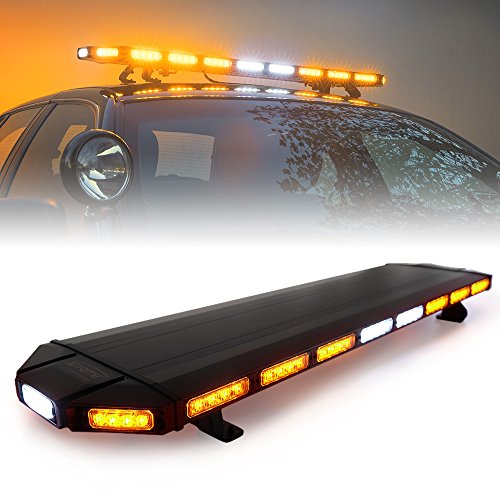
Best for: Tow trucks and security vehicles needing a compact, high-output bar. The Black Hawk series uses six-generation TIR LEDs across 22 lightheads, totaling 88 LEDs, delivering 360° coverage day or night with flood lenses for strong brightness. It supports 15 strobe patterns and remembers the last pattern. This makes it suitable for municipal fleets or private towers that require reliable, all-weather signaling from a low-profile unit. Caution: Its large size may require rooftop mounting space on some compact vehicles.
CFLMYYXGS 55″ 104 LED Light Bar

Best for: Operators needing long-range visibility and a large warning presence. With 104 LEDs in 26 modules and flood lenses, this bar claims 1-2 miles of visibility, making it well-suited for highway tow operations and crane construction sites. It offers 26 patterns and a pattern memory function for quick recall. Caution: The larger 55″ footprint may require extra roof space and electricity planning for older vehicles.
VAGMI 55″ Amber White Bar

Best for: Versatile emergency signaling with a wide operating voltage. The bar supports 12-24V input and includes 104W high-power LEDs with both amber and white outputs. It emphasizes multi-use utility, suitable for tow trucks, sanitation or rescue vehicles, and snow plows. Caution: The product listing highlights a two-year warranty, but actual installation considerations and mounting compatibility should be validated for each vehicle model.
LUMENIX 48 Inch Rooftop Bar

Best for: Tow trucks and construction fleets needing high-visibility signaling with durable all-weather construction. This bar uses 216 LEDs with an aluminum shell and scratch-resistant lenses. It provides 21 flashing patterns, including take-down and alley lights, along with a control box for quick pattern changes. Caution: As a higher-output unit, it can require careful electrical planning and secure mounting to prevent vibration on rough roads.
LRTER 42 Inch 206 LED Bar

Best for: Budget-conscious buyers seeking a broad range of modes. The LRTER bar features 206 LEDs and a 9-button controller with 20 modes, including pattern memory and directional quick select. It warns about magnetic mounting compatibility: aluminum roofs may not support magnets, so verify mounting method. Caution: Magnet-based mounting may not work on aluminum roofs; check mounting hardware compatibility before purchase.
ASPL 48″ High-Intensity Low-Profile Bar

Best for: Tow trucks and construction vehicles needing robust, low-profile lighting with versatile mode options. This SAE Class I bar provides 360° lighting with 30 flash modes and a memory function. It features a dual-layer aluminum board and long life up to 100,000 hours. Caution: The low-profile design means it may require precise mounting alignment to maximize coverage and avoid obstruction.
Buying Guide
Key considerations when selecting a tow truck strobe light bar include brightness and coverage, pattern variety, mounting compatibility, weather resistance, and electrical compatibility. For high-traffic or highway use, prioritize long-range visibility and 360° coverage. For fleet operators, pattern memory and quick switching improve workflow. Mounting type matters: magnet bases work on steel roofs but not aluminum; many trucks use permanently mounted brackets for reliability. Consider the vehicle’s electrical system (12V vs 24V) and whether a control box is included for pattern selection and memory functions.
Practical questions
- What is the expected visibility distance for daylight operation? Look for high-intensity LEDs and flood lenses; most top options claim several thousand feet to a mile in daylight conditions.
- Do I need a specific mounting method? If your roof is aluminum, magnets may not work; choose a bar with bracket mounting.
- How many patterns are necessary? More patterns provide flexibility in different scenarios, but consider ease of use and pattern memory features.
- Is there a warranty or support? Some products mention a warranty; verify terms with the seller before purchase.
Frequently Asked Questions
- What makes a strobe light bar better for tow trucks? Higher brightness, 360° coverage, and reliable pattern memory help with traffic control and signaling during roadside work.
- Can I install these bars on any tow truck? Most bars use standard 12-24V systems, but mounting hardware and roof material must be compatible.
- Are there regulatory considerations? Some bars are SAE Class I or have specific approvals; check local regulations for emergency signaling equipment.
- Do these bars require professional installation? Depending on vehicle and electrical setup, installation can be DIY with caution, or may require professional mounting and wiring.
- What maintenance is needed? Regular cleaning of lenses and checking mounting bolts helps maintain brightness and safe operation.
- Can these bars be used for non-emergency signaling? They can warn or alert in non-emergency scenarios, but ensure compliance with local laws for non-emergency use.