Answering the common question “which trailer tow bar extension should I buy?” this guide presents five reliable options that fit standard 2-inch receivers, balance strength with clearance, and are suitable for light- to mid-duty towing. Ideal buyers include occasional trailer users, bike rack or cargo carrier owners, and anyone needing extra clearance to prevent bumper or hitch interference. Below you’ll find concise comparisons, target scenarios, and practical buying tips to help you choose the right extension for your setup.
Summary of chosen products:
| Product | Extend Length | Max GTW | TW | |
|---|---|---|---|---|
| TYT Trailer Hitch Extension 18″ | 18 inches | 3500 lbs | 350 lbs | Light-to-moderate towing with extra clearance |
| OPENROAD Trailer Hitch Extension 12″ | 12 inches | 5000 lbs | 500 lbs | Long reach without hitting bumper/t tailgate |
| MAXXHAUL 7″ Hitch Extension | 7 inches | 3500 lbs | 350 lbs | Compact extension for tighter spaces |
| TYT 12″ Trailer Hitch Extension | 12 inches | 5000 lbs | 500 lbs | Higher towing capacity with added reach |
| REYSUN 7″ Trailer Hitch Extender | 7 inches | 3500 lbs | 350 lbs | Budget-friendly, standard 2″ hitch extenders |
TYT Trailer Hitch Extension 18″ – 2-Inch Receiver
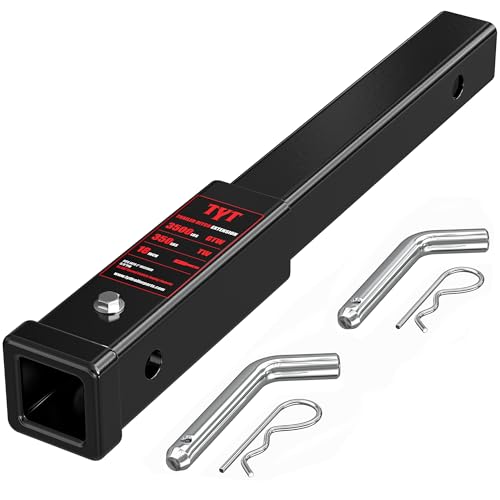
Features: Universal compatibility with standard 2-inch receivers; rated up to 3,500 lbs GTW and 350 lbs TW; 18-inch hole-to-hole extension for increased trailer and cargo carrier clearance.
Best for: Owners needing substantial extra reach without compromising hitch stability, especially for larger cargo carriers or bike racks. Better for: light-duty to moderate towing tasks where bumper clearance is a concern. Choose this if you regularly haul wider trailers or racks that sit close to the vehicle bumper.
Caution: Higher extension length can increase moment load; ensure your hitch and vehicle frame are compatible with extended leverage.
OPENROAD Trailer Hitch Extension 12″

Features: Wide compatibility with 2-inch receivers; 12-inch extension provides extra reach to prevent contact with bumpers or tailgates; includes an anti-rattle pad to reduce noise and vibration during travel.
Best for: Vehicles where bumper clearance is tight and a moderate extension helps avoid contact during turns or uneven terrain. Better for: daily-use trailers and cargo carriers where quiet towing matters. Caution: The longer extension can alter hitch geometry; verify clearance for your specific trailer and hitch setup.
MAXXHAUL 7″ Extension
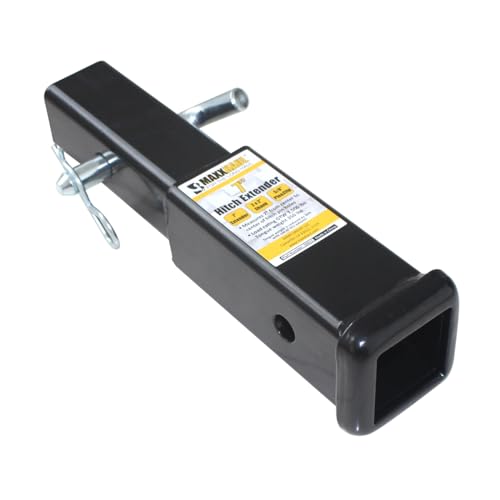
Features: Extends hitch by 7 inches; 2-inch receiver square tube; includes 5/8-inch hitch pin and clips for secure attachment; broad compatibility for a variety of hitch-mounted accessories.
Best for: Users needing a compact reach extension in tighter spaces or when adding bike racks or small cargo carriers. Better for: standard towing tasks with moderate extension. Caution: The shorter length reduces leverage reduction benefits; ensure enough clearance for your specific trailer.
TYT 12″ Trailer Hitch Extension

Features: Universal fit for most 2-inch receivers; rated up to 5,000 lbs GTW and 500 lbs TW; includes two sets of 5/8″ premium hitch pins for flexibility and redundancy; 12-inch extension length provides significant clearance.
Best for: Heavier-towing scenarios or when higher capacity and redundancy in pins are important. Better for: frequent use with larger trailers or heavy cargo carriers. Caution: Higher capacity extension may require checking vehicle payload and hitch class compatibility.
REYSUN Receiver Tube 7″ Extender

Features: 2×2 inch standard hitch size; 7-inch extension length; rated to tow up to 3,500 lbs GTW and 350 lbs TW; includes hitch pin and clip.
Best for: Budget-conscious buyers needing a mid-length extension with reliable, standard sizing. Better for: casual towing and light cargo setups. Caution: May not be ideal for high-torque or long-distance towing where added leverage matters most.
Buying Guide
What should you consider when choosing a trailer tow bar extension?
- Receiver size and compatibility: Confirm a universal 2-inch receiver fit and ensure the extension’s tube matches your hitch.
- Extension length: Longer extensions add clearance but can increase leverage on the hitch; shorter extensions are more compact and stable for tight spaces.
- Weight rating: Match GTW (Gross Trailer Weight) and TW (Tongue Weight) with your trailer and vehicle capabilities; avoid exceeding the lower of the hitch or vehicle ratings.
- Secure attachment: Look for included hitch pins and clips; some models provide extra pins for convenience and redundancy.
- Noise and vibration: Anti-rattle features help reduce hitch noise, especially on longer trips or rough roads.
- Installation ease: Quick-connect designs and straightforward bolt-on or pin-secure systems speed up setup and removal.
Vehicle and Trailer Scenarios
- Frequent bike rack or cargo carrier users: Prioritize 7–12 inch extensions with secure pins and good clearance.
- Light-duty towing around town: Look for 7–12 inch extensions with moderate GTW/TW ratings to balance reach and stability.
- Large trailers or utility trailers: Require higher GTW and longer reach; consider extensions rated for 5,000 lbs GTW if applicable.
Installation Tips
- Check hitch alignment before driving away; ensure the extension does not contact the bumper or frame.
- Torque hitch pins to manufacturer recommendations if provided; avoid overtightening to prevent tube damage.
- Inspect extension and pins for wear after first use and periodically during use.
FAQ
- What is a trailer hitch extension used for? It adds length between the vehicle receiver and the trailer hitch, increasing clearance for trailers, bike racks, or cargo carriers.
- Is a longer extension always better? Not necessarily. Longer extensions increase leverage and can affect stability; choose length based on needed clearance and towing load.
- Do I need a hitch pin with an extension? Most extensions include a hitch pin and clips, but always verify included hardware before purchasing.
- Can I use any 2-inch extension with any vehicle? Most 2-inch hitch extensions are standard, but verify weight ratings and vehicle compatibility for safety.
- What happens if I exceed GTW or TW ratings? Exceeding limits can cause hitch failure, frame damage, or loss of trailer control; adhere to rated capacities.
- Do anti-rattle pads improve towing? Yes, they reduce noise and vibration, improving overall towing comfort and stability.