Looking for a reliable transom mount fuel tank for outboard engines and deck boats? This guide highlights five top options that balance capacity, durability, and ease of use. Best for anglers needing long runtimes, or boaters who want quick refuel with minimal spillage. The selections favor tanks with clear gauges, long hoses, and sturdy materials so you can plan trips with confidence. The following table compares the five picks to help you choose quickly.
| Product | Capacity | Best For | Key Benefit | Limitation |
|---|---|---|---|---|
| VEVOR Marine Tank, 14.53 Gal | 14.53 gal (55 L) | Long trips, larger outboards | Visible gauge, 9.8 ft hose, leak-proof design | Requires 80% fill rule |
| Scepter 12 Gallon Portable Marine Gas Can | 12 gal | Compact but ample capacity | Built-in gauge, 2-way vented cap | Fuel line sold separately |
| PeakPursuit Portable Boat Tank, 6 Gal | 6 gal | Small boats, easy transport | 9.8 ft hose, dual venting | Lower capacity |
| VEVOR Marine Tank, 6.34-Gallon | 6.34 gal | Moderate use, deck boats | HDPE, gauge included | Standard hose length |
| AloneGoer 3 Gallon Portable Boat Fuel Tank | 3 gal | Spare tank, emergency reserve | HDPE-EVOH-HDPE multi-layer barrier | Smaller capacity |
VEVOR Marine Tank, 14.53 Gallon

Best for: boaters with larger outboard engines or longer cruising plans. This tank offers a high capacity of 14.53 gallons, reducing the need for frequent refueling on fishing trips or long deck cruises. A 9.8 ft hose supports flexible routing, and a visible gauge helps monitor fuel level at a glance.
Why selected: The high-density polyethylene construction resists aging, impact, and corrosion. The separate inlet and outlet minimize spillage, protecting your deck and engine area. An important use note is to avoid filling beyond 80% capacity to limit evaporation and security risks during use.
Limitations: Direct sunlight exposure should be minimized to avoid product aging and expansion. The tank is designed for compatibility with Yamaha connectors in some setups, so verify fitting requirements for your motor before installation.
Scepter 12 Gallon Portable Marine Gas Can

Best for: boaters needing a compact, still-capacious can with integrated fuel gauging and venting. The 12-gallon tank balances portability with sufficient fuel for extended day trips on outboard-powered craft.
Why selected: It includes a built-in fuel gauge and a 2-way vented cap design to prevent dangerous vapor buildup during refueling. The container is EPA & CARB compliant and compatible with diesel and ethanol-blended fuels, though the fuel line is sold separately and must be matched to standard marine fittings.
Limitations: The fuel line must be purchased separately, and compatibility with your specific boat fittings should be confirmed before use.
PeakPursuit Portable Boat Tank, 6 Gal

Best for: smaller boats, deck boats, or as a reliable spare fuel option. The 6-gallon capacity suits short trips, tender operations, or emergency reserves without adding significant weight.
Why selected: A long 9.8 ft hose provides flexible routing. The tank is built from impact-resistant HDPE, offering durability against marine use and exposure to salt spray. Dual venting supports smooth flow and maintains pressure balance during refueling.
Limitations: The capacity is moderate, so longer trips may require refueling more frequently. Ensure the hose and fittings match your engine setup for a leak-free connection.
VEVOR Marine Tank, 6.34-Gallon

Best for: deck boats or mid-sized vessels needing a compact, easy-to-handle tank. The 6.34-gallon capacity fits many dual-gear configurations without dominating the storage space.
Why selected: The gauge provides quick level checks, and the HDPE construction ensures resilience against aging and corrosion. A notable caution is to avoid prolonged sun exposure to prevent aging and expansion.
Limitations: Slightly smaller capacity than the larger VEVOR model, which may require more frequent top-offs on lengthy trips.
AloneGoer 3 Gallon Portable Boat Fuel Tank
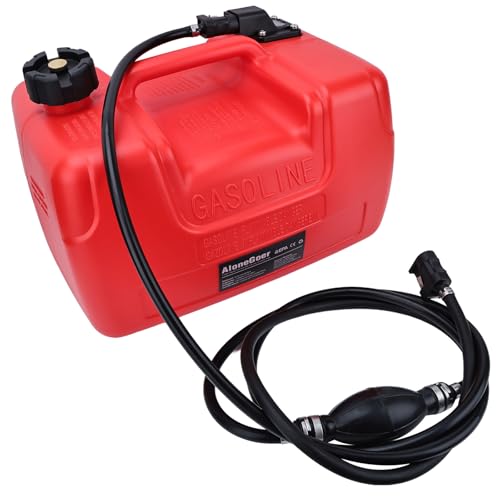
Best for: emergency reserves or small craft operations where space is at a premium. The 3-gallon capacity keeps weight low and handling simple.
Why selected: This tank uses a multi-layer barrier technology (HDPE-EVOH-HDPE) to reduce fuel molecule permeation and limit evaporation. It includes UV stabilization and salt spray resistance for marine environments.
Limitations: The smaller capacity means more frequent refueling on longer trips, and ensure the Yamaha or other engine connectors match your setup if replacing an OEM tank.
Buying Guide
What size tank do I need?
Consider typical trip duration, engine fuel consumption, and storage space. Larger tanks are best for longer trips or high-consumption engines, while smaller tanks fit compact boats or emergency reserves.
What hose length and fittings matter?
A long hose, like 9.8 ft, offers routing flexibility on many boats. Confirm the inner diameter matches your engine fittings and that the cap design allows for safe venting and pressure control.
What materials provide the best durability?
High-density polyethylene (HDPE) tanks resist aging, impact, and corrosion. Multi-layer barriers reduce evaporation risks. UV stabilization helps with sun exposure in open decks.
Is a built-in gauge important?
Gauges enable quick fuel checks without removing caps. This is especially helpful for avoiding overfilling and for planning refuels during trips.
Vent design and spill prevention
Two-way venting caps or separate inlets/outlets minimize vapor buildup and spills. Proper venting supports safe refueling and reduces dirt entry into the tank.
Installation and compatibility considerations
Check compatibility with your boat model, engine type, and mounting options. Some tanks are designed with specific connectors in mind; verify alignment with your hardware before purchasing.
Maintenance and safety reminders
Avoid prolonged direct sunlight on tanks to prevent aging and expansion. Follow the manufacturer’s guidance for storage, handling, and refueling practices to minimize risk.
Practical buying checklist
- Capacity vs. space on your boat
- Hose length and inner diameter match
- Gauge visibility and ease of use
- Durability against salt spray and impacts
- Vent design to prevent vapors and spills
FAQ
Q: Do these tanks fit all outboard motors?
A: Most tanks use common marine hose sizes and fittings, but verify the connector type and gas compatibility for your engine model before purchase.
Q: Can I mount these tanks on a transom?
A: Yes, several models are designed for deck or transom mounting, but ensure proper brackets and mounting hardware are used as per the product guide.
Q: Are these tanks compatible with diesel or ethanol blends?
A: Some models support diesel or ethanol-blended fuels. Always check the product features and local regulations before refueling with non-petroleum fuels.
Q: How should I store a full tank when not in use?
A: Store in a shaded area away from heat sources. Do not leave tanks full in prolonged direct sunlight; follow the manufacturer’s guidance on evaporation limits and venting.
These five transom-friendly fuel tanks cover a range of boats from small inflatables to deck boats. Use the Buying Guide and the FAQ to refine your choice based on capacity, compatibility, and safety features, ensuring you select a tank that meets your boating needs while facilitating efficient fuel management. Always confirm installation requirements and local regulations before mounting or refueling.