Direct answer: for buyers seeking louder turn signal flashers that work reliably under varying loads, these options provide stronger audible alerts and robust performance. The best fits include drivers who want a clearly audible indicator in noisy environments, enthusiasts upgrading older vehicles, and fleets needing dependable signaling hardware. Below is a short buying guide, followed by five top products with clear pros, best-use scenarios, and practical cautions.
| Product | Voltage / Type | Best For |
|---|---|---|
| Bussmann BP/577-RP | 12V DC Thermal | Classic 12V cars requiring loud, heat-based flashing |
| Bussmann No.577 | 12V DC Thermal | Vehicles needing extra-loud, load-tolerant flashing |
| CEC TF552/536 Flasher | 0.27–14A, 11–15V DC | Two-terminal reliability for wider current ranges |
| iRhapsody 2-Pin Flasher Relay | 12V DC, LED/Incandescent compatible | LED and incandescents with stable flashing |
| CEC EF32 12V Heavy Duty | 12V, 2-prong, 300W | Durable, high-wattage applications |
Note: All products listed are primarily designed for automotive turn signal applications and are chosen for audible performance and compatibility with 12V systems. This summary helps compare scenarios, but always verify vehicle-specific compatibility before purchase.
Bussmann BP/577-RP Loud Flasher

This 12V thermal flasher uses heat build-up to switch the circuit on and off, delivering an extra-loud audible cue. It is designed to operate correctly under variable loads, making it a solid choice for vehicles with bulb count changes or fluctuating electrical draw. Best for classic cars or trucks where the audible signal is essential for lane changes and signaling in traffic. The main limitation is that, as a thermal device, flashing speed can shift with ambient temperature and load fluctuations.
Bussmann No.577 Loud Thermal Flasher
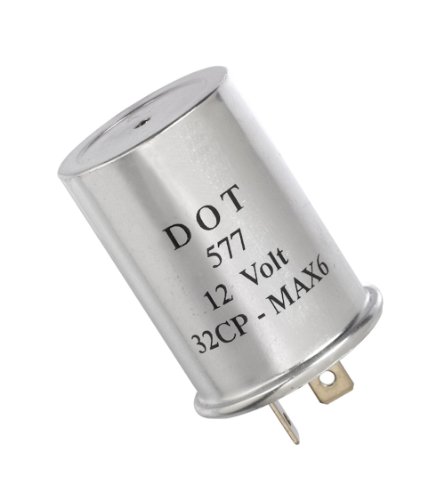
This 12V thermal flasher is explicitly noted as extra loud and is designed to function under variable load. It relies on heat buildup to cycle the signal, which makes it suitable for vehicles with standard bulb configurations while still providing a louder alert. Choose this if you want a straightforward, robust thermal option and you’re not relying on electronic speed control. Caution: thermal flashers can be slower to respond to rapid load changes than solid-state units.
CEC TF552/536 Flasher
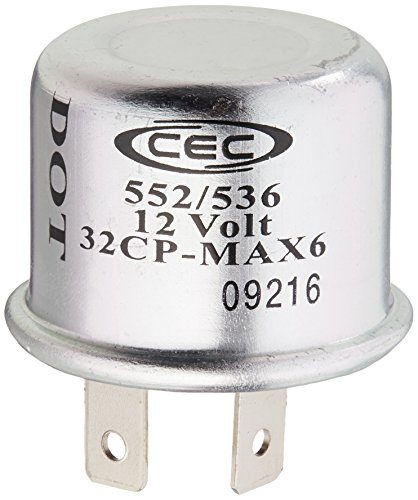
This unit covers a wide 0.27–14 amps range and operates from 11 to 15 volts DC. It uses two terminals and a round aluminum design, making it compatible with many vehicle wiring setups. Best for drivers who need a compact, versatile flasher that can cope with different loads and still deliver a loud signal. Limitation: its two-terminal design may require careful wiring matching to the vehicle’s circuit configuration.
iRhapsody 2-Pin LED Flasher Relay

This 12V LED flasher relay is rated for 10A with two pins and includes guidance for orientation during installation and kick-on testing. It supports LED and incandescent lamps, offering flexible compatibility. Best for modern vehicles using LED indicators or mixed lighting. Caution: unadjustable flash rate means it may not suit all vehicle lighting configurations, particularly high-wamp or low-wattage LED setups.
Bussmann BP552RP Heavy-Duty Flasher

This heavy-duty flasher is designed for directional and hazard signaling with an 8A rating. It supports 2 to 6 bulbs, operates at 12V, and is DOT-approved with variable load capability. Best for vehicles needing a tougher, higher-wamp flasher for multiple bulbs. Limitation: 8A may be insufficient for higher-wattage headlight or turn-signal configurations in some applications.
12V 3 Pin Electronic Flasher Relay (LDMINDA)

This 3-prong electronic flasher is rated for up to 20A and is compatible with both LED and incandescent lamps. It supports 12V operation and includes versatile installation options for a variety of vehicles. Best for drivers upgrading to LED lighting while retaining a compact, universal relay. Caution: ensure correct pin alignment for your vehicle’s wiring harness to avoid mis-operation.
Buying Guide: Key Considerations for Loud Turn Signal Flashers
- Voltage and compatibility: Confirm the vehicle’s electrical system is 12V and that the flasher is compatible with the lamp type (LED vs incandescent).
- Current rating: Match the amp rating to the number of bulbs and their wattage to avoid overload or weak flashing.
- Flashing method: Thermal flashers use heat to switch; electronic flashers use solid-state control. Thermal units can be affected by ambient temperature, while electronic units offer consistent speed but may be less forgiving with unusual bulb configurations.
- Load stability: Vehicles with variable loads (e.g., added accessories or multiple bulb configurations) benefit from flashers designed for variable-load operation.
- Durability and environment: Consider enclosure and materials for exposure to weather, moisture, or vibration, especially for motorcycles or outdoor installations.
- Installation orientation: Some units require specific orientation or mounting to ensure proper kick-on and timing.
Frequently Asked Questions
- What makes a turn signal flasher ‘loud’?
Answer: It’s designed to produce a more audible click or chatter during operation, often achieved by the flasher’s internal cycling method and the electrical load it controls. - Can I mix LED and incandescent bulbs with a single flasher?
Answer: Some flashers handle mixed loads, especially electronic types designed for LEDs, but always verify the current rating and load compatibility. - Is a thermal flasher slower to respond than an electronic one?
Answer: Thermal flashers depend on heat buildup, which can introduce minor delay under rapid load changes; electronic flashers typically provide stable, quicker flashing. - What precautions should I take when replacing a flasher?
Answer: Disconnect the battery before installation, verify the wiring diagram for pin configuration, and avoid overtightening connectors to prevent damage. - Are DOT-approved flashers required for all vehicles?
Answer: DOT approval is common for road-use flashers, but requirements vary by jurisdiction and vehicle type; check local regulations and OEM guidance. - Will a higher-amp flasher improve visibility?
Answer: Not necessarily; brightness is related to bulbs and power available, but a suitable high-amp flasher ensures reliable operation without overload.