If you’re seeking compact, gas-powered generators that are easy to move and gentle on your campsite or home backup, you’re in the right place. These five small to mid-size models balance portability with reliable power, making them suitable for tents, cabins, tailgates, and light duty home use. The buyer profiles below help you pick the best match: ultra-light hikers may favor the lightest options; DIYers need steady output for tools; and families look for longer runtimes with quiet operation. A quick comparison table follows to highlight core specs at a glance.
- ACEUP Energy 1200W – Best for light home backup and easy transport
- GENMAX GM1200i – Best for sensitive electronics and ultra-light camping
- AIVOLT 1600W – Best for longer run times and quiet operation
- PowerSmart 1200W – Best for portable versatility and short outages
- POXURIO 2450-Watt – Best for higher power needs in a compact form
| Product | Power (W) | Run Time (approx.) | Weight | Best For |
|---|---|---|---|---|
| ACEUP Energy 1200W | 900 running / 1200 peak | Up to 6 hours at half load | Lightweight | Home backup & small tools |
| GENMAX GM1200i | 1000 running / 1200 starting | Up to 6.5 hours at 50% load | Lightweight | Sensitive electronics & camping |
| AIVOLT 1600W | 1260 running / 1600 starting | Up to 8 hours at 25% load | Very light | Off-grid power & office backups |
| PowerSmart 1200W | 900 running / 1200 surge | Up to 5 hours at 50% load | Portable | Camping & emergency use |
| POXURIO 2450-Watt | ~2450 starting, 1900-2100 running | Up to 8.3 hours at lower load | Compact | Home essentials & RV |
ACEUP Energy 1200W Gas Generator

Power specifications show 900 running watts and 1200 peak watts with a recoil start. It provides a standard 120V household outlet and a 12V DC port for accessories. The unit promises up to 6 hours at half load with a 1.1-gallon tank. This model is best for light home backup and small tools. A clear caution is the limited runtime at higher loads, which may require frequent refueling during longer outages.
GENMAX Portable Generator GM1200i

The GENMAX GM1200i is a 1200-watt inverter generator designed for sensitive electronics, delivering less than 3% total harmonic distortion. It weighs around the low end of portable units, making it easy to carry for camping or accidental outages. It’s best for users who need clean power for laptops, phones, and small devices. A potential downside is that it’s still a compact unit, so high-demand loads may require careful energy management.
AIVOLT 1600W Super Quiet Inverter Generator
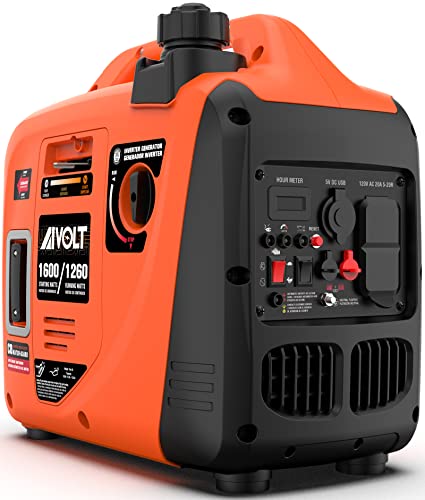
This model delivers 1260 running watts with 1600 starting watts and up to 8 hours of operation at 25% load. It weighs about 28 pounds, emphasizing portability. It features eco-mode, quiet operation at 57 dBA from 23 feet, and is suitable for home office backups or camping. Best for users who want longer run times with minimal noise. A limitation is that at higher loads, fuel efficiency may decline more quickly than larger units.
PowerSmart 1200W Portable Gas Generator

This unit provides 900 surge watts and 1200 running watts in a compact 39-pound frame. It is designed for camping lights, small appliances, and emergency use. The run time is about 5 hours at 50% load, making it suitable for shorter trips or quick outages. Choose this if you want a balanced mix of portability and steady power without carrying a heavy unit.
POXURIO 2450-Watt Portable Inverter Generator

The POXURIO model starts reliably at 2450 watts and provides clean, stable sine wave power suitable for essential appliances and RV use. It runs efficiently on a 1.6-gallon tank for up to about 8.3 hours at lighter loads, making it a feasible choice for weekend trips or remote job sites. Best for users who need higher output in a compact package, but note that the noise level can be higher than ultra-quiet micro units at peak loads.
Buying Guide: Key Purchase Considerations
- Portability vs. power: Small generators trade power for weight. If you need to move the unit often, prioritize models under 30 pounds with quick-start options.
- Run time and fuel efficiency: Look for larger fuel tanks and efficient engines to minimize refueling interruptions during trips or outages.
- Noise level: For camping and residential settings, prefer units labeled as whisper-quiet or with decibel ratings around 50–60 dBA at a standard distance.
- Power quality: Inverter technology with low THD is important to protect sensitive electronics like laptops and TVs.
- Outlets and features: Check for a mix of 120V outlets, USB ports, and RV readiness if you need to run ACs or RV gear.
- Fuel and maintenance: Gasoline engines are common and easy to refuel, but check fuel tank capacity, oil requirements, and availability of replacement parts.
FAQ
- What size generator do I need for basic camping and home backup? Generally, 1000–1600 watts covers lights and small appliances; 2000–3000 watts covers a few tools or more appliances.
- Are inverter generators safer for electronics? Yes. Inverters typically produce clean power with low THD, which reduces risk to sensitive devices.
- How long can these small generators run on a full tank? Run times vary by load; expect roughly 5–8 hours at moderate load for most 1200–1600W models and longer at lighter loads.
- Is louder always better for power? Not for camping or residential settings. Ultra-quiet models reduce noise without sacrificing necessary power.
- Can I parallel two small generators for more power? Some models offer parallel capability, but verify compatibility and required cables for each unit.
- What maintenance should I plan for a gas generator? Regular oil checks, air filter cleaning, spark plug inspection, and fuel stabilization are common maintenance steps.