Answering your search for effective wax and grease removers, this article highlights five reliable products to prepare auto surfaces for painting, coatings, or detailing. These cleaners are best for automotive professionals and DIYers who need a clean, residue-free surface before finishing. The following selections balance strong degreasing power, fast drying, and compatibility with various substrates. A quick buyer table summarizes core details to compare at a glance.
| Product | Brand | Best For | Notes |
|---|---|---|---|
| Rust-Oleum Automotive Wax & Tar Remover | Rust-Oleum | General auto body prep on metal surfaces | 32 oz, solvent-based |
| LAUCO Wax and Grease Remover | LAUCO | Multi-surface prep including plastic and fiberglass | 1 gallon, fast-drying |
| Custom Shop Panel Prep Surface Cleaner | Custom Shop | Professional auto body paint prep | 18 oz spray, residue-free |
| Klean-Strip Prep-All | KLEAN-STRIP | Thorough prep on metal, plastic, fiberglass | 1 gallon, multi-surface |
| Custom Shop KW901 Grease & Wax Remover | Custom Shop | Pre-paint prep and adhesion boost | Gallon, fast-acting |
Rust-Oleum Wax & Tar Remover
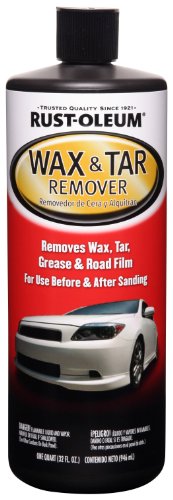
Best for: General auto body prep on metal surfaces. This remover targets wax and tar, helping to strip stubborn residues before priming or painting. It dries relatively quickly and minimizes oily traces that could interfere with primer adhesion. Use when the surface has classic wax layers or road tar that standard cleaners don’t fully remove. Caution: ensure adequate ventilation due to solvent content and avoid prolonged skin contact.
LAUCO Wax And Grease Remover

Best for: Multi-surface prep on automotive panels, plastic, metal, fiberglass, and aluminum. LAUCO’s solvent degreaser is designed to remove wax, grease, oil, and silicone quickly, leaving a clean surface for flawless adhesion. The product is marketed as fast-drying with no oily residue, which helps prevent finish defects. Caution: check compatibility with very sensitive plastics and apply in a well-ventilated area.
Custom Shop Panel Prep Surface Cleaner

Best for: Professional auto body paint prep. This cleaner emphasizes adhesive removal, oil, silicone, and road tar, with a waterborne formula that reduces residue and static, aiding metallic orientation. It’s suitable for primed or painted surfaces as well as plastic and aluminum. Caution: as with any solvent-based cleaner, perform a spot test first to confirm surface compatibility and avoid prolonged exposure on finished surfaces.
Klean-Strip Prep-All

Best for: Thorough multi-surface prep on metal, plastic, and fiberglass with a fast-acting formula. Prep-All is designed to set up a paint-ready surface by removing wax, grease, and contaminants. It’s a versatile option for garages and professional shops. Caution: follow the label for ventilation and avoid application on hot surfaces to prevent rapid evaporation that can reduce cleaning efficacy.
Custom Shop KW901 Grease And Wax Remover
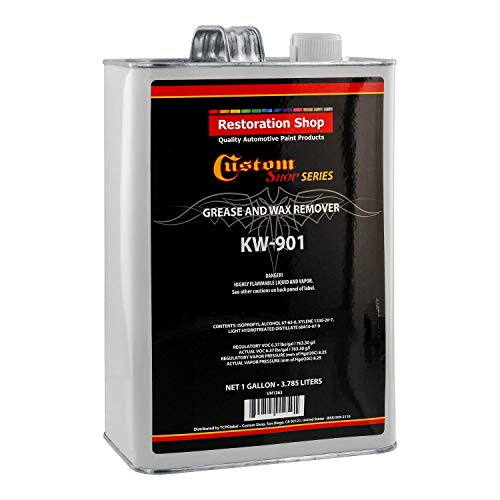
Best for: Pre-paint prep to maximize paint adhesion. KW901 is a fast-acting grease and wax remover designed for use before bodywork or painting, dissolving contaminants such as tar and silicone. It works on painted surfaces, metal, plastic, epoxy, and fiberglass. Caution: ensure complete residue removal as any remaining solvent can affect topcoat adhesion.
Buying Guide: Key Considerations For Wax And Grease Removers
What surface will you prep?
Different products are formulated for metal, plastic, fiberglass, and painted surfaces. Choose a formula that explicitly states compatibility with your substrate to avoid damage or poor adhesion.
Residue and drying time
Look for solvents that dry quickly and leave little to no residue. A residue-free surface reduces the risk of topcoat defects and improves adhesion for primers and paints.
VOC content and ventilation
Solvent-based removers can produce strong fumes. If you work indoors, select products with lower volatile organic compound (VOC) content and ensure proper ventilation and PPE usage.
Applicability and convenience
Spray vs. wipe formulations and gallon vs. quart sizes affect workflow. For larger jobs, gallon-size products reduce reordering frequency. For spot cleaning, spray shorter and more controllable options may be ideal.
Safety and residue testing
Always perform a small-area patch test before full application. Some cleaners may interact with coatings or finishes, causing dulling or discoloration if not fully compatible.
Best practice workflow
Start with a dedicated wax and grease remover to strip wax, oil, and silicone. Follow with a clean rinse or wipe, then allow the surface to dry completely before applying primer or paint.
Frequently Asked Questions
- What is the purpose of a wax and grease remover in auto body prep? It dissolves and removes wax, oils, silicones, and contaminants to promote adhesion of primers and coatings.
- Can I use any solvent on plastic parts? Some removers are formulated for multiple substrates, but always verify compatibility with plastics to avoid damage.
- Should I rinse after applying a wax remover? Many products are designed to dry with no residue, but follow the product label for best results.
- Is there a difference between wax remover and paint prep solvent? Wax removers focus on surface contaminants, while paint prep solvents emphasize residue-free surfaces for adhesion and finish quality.
- What safety gear should I use? Use gloves, eye protection, and proper ventilation when handling solvent-based cleaners.
- How do I choose the right product for a light detailing job? For light cleaning, a milder remover with quick-drying properties may be sufficient and reduce risk of surface alteration.