Finding the right wheel bolt circle gauge is essential for quick, precise fitting of aftermarket rims and trailer axles. This guide highlights five reliable options for American buyers that balance accuracy, ease of use, and durability. Suitable for shop professionals, DIY enthusiasts, and roadside tinkerers, these gauges help confirm bolt patterns before wheel swaps or maintenance. Below, a quick comparison table and detailed sections for each product will help you choose the best fit for your needs.
| Product | Brand | Pattern Range | Best For | Note |
|---|---|---|---|---|
| eaacaa Wheel Bolt Pattern Measuring Tool | eaacaa | 5/6/8 lug patterns | Beginners and pros needing fast identification | Red, durable, 10-second read |
| WHEEL CONNECT PCD Gauge | WHEEL CONNECT | 4×100 to 5×150 etc. | Wheel shops and enthusiasts measuring varied patterns | Metric/Imperial readout |
| EZISOE Wheel PCD Gauge | EZISOE | 4–5–6–8 lug patterns | Compact, versatile gauge for common cars | Sliding caliper style |
| Kingdder Wheel PCD Gauge | Kingdder | 4–8 lug patterns | Emergency use and frequent replacements | Two gauges included |
| YINARONG Wheel Bolt Pattern Measuring Tool | YINARONG | 5/6/8 holes | Professional fast matching | 5-hole integrated design |
eaacaa 5 Lug Template Gauge

The eaacaa 5 Lug Template Gauge uses four standard scales—4-1/4″, 4-1/2″, 4-3/4″, 5″, and 5-1/2″—to match most common bolt patterns. Three-step operation (align, slide, read) delivers a quick identification, reducing guesswork during wheel replacement. The tool is described as durable with an industrial-grade build that resists wear in shop or outdoor environments. Best for beginners who want a fast, reliable read without calculations.
Best for: Beginners and intermediate users who want a straightforward, no-fuss measurement method.
Limitations: May not cover very unusual or ultra-high lug counts without cross-checking with another gauge if your pattern falls outside the listed scales.
WHEEL CONNECT PCD Gauge
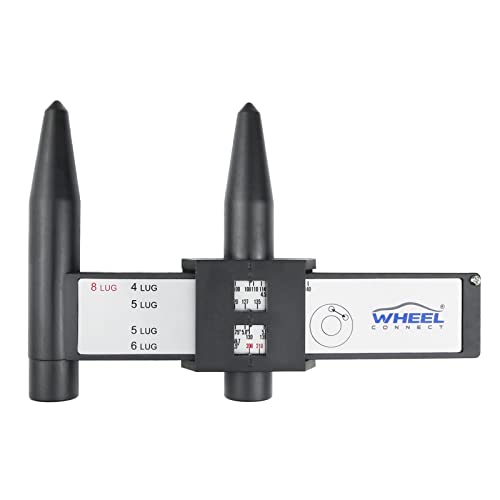
The WHEEL CONNECT PCD Gauge functions as a sliding caliper that reads both metric and imperial data, accommodating a wide range of bolt patterns from 4×100 to 5×150 and beyond. Its straightforward design is ideal for wheel shops and individual enthusiasts who need quick, on-the-spot measurements without manual calculation. The gauge’s versatility supports multiple lugs configurations, making it a strong all-rounder for varied vehicle fleets.
Best for: Shops or tinkerers who measure diverse car models and wheel setups.
Limitations: Reading precision depends on proper alignment; misalignment can lead to reading errors, especially on tight patterns.
EZISOE PCD Gauge

EZISOE offers a compact PCD gauge that covers 4, 5, 6, and 8-lug patterns. The ruler-style gauge reads quickly with a sliding caliper, supporting common bolt patterns found on many passenger cars and light trucks. It’s a practical pick for personal garages or mobile repairs where space and weight matter. The tool’s lightweight build makes it easy to carry, though long-term durability should be monitored with care in rugged environments.
Best for: Car owners who need a portable, simple solution for typical passenger cars.
Limitations: May not include extended ranges for less common heavy-duty vehicles; verify your exact pattern against the scales before relying on it for critical fits.
Kingdder Wheel PCD Gauge (2 Pack)

Kingdder offers a two-pack wheel PCD gauge, providing redundancy for users who need a spare or two different gauges for cross-checking measurements. It supports 4–8 lug patterns, and the tool emphasizes ease of use: slide the caliper to the position that matches a wheel nut hole or hub hole, then read in metric or imperial. Designed with ABS plastic for durability and lightness, this set is suited for everyday use and travel repair kits.
Best for: People who want a backup gauge or multiple gauges for a single project.
Limitations: ABS plastic, while durable, may show wear with heavy, frequent use in harsh shop conditions over time.
YINARONG Wheel Bolt Pattern Measuring Tool
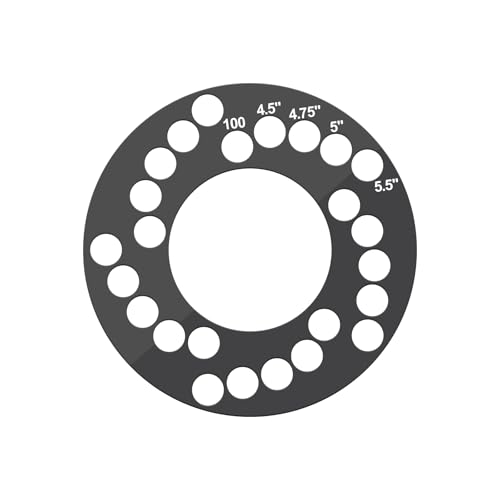
YINARONG’s 5-hole integrated template provides precise hole position markings across 100mm/4.5″, 4.75″, 5″, and 5.5″ scales. The tool is designed to eliminate guesswork with a simple three-step approach: align, slide, read. Its thickened acrylic material resists deformation, maintaining clear scales even after repeated use. The 5-hole integration is intended to boost efficiency when swapping between common 5-lug patterns and others.
Best for: Professionals who need a fast, accurate, reusable gauge with a straightforward workflow.
Limitations: The integrated 5-hole design may be overkill for some 4-lug or multi-vehicle fleets; verify your typical patterns before relying on it exclusively.
Buying Guide: How To Choose The Right Wheel Bolt Pattern Gauge
Consider these practical factors when selecting a gauge for your shop or garage:
- Pattern coverage: Confirm the lug configurations you encounter most (4, 5, 6, or 8 lug) and whether you need a single gauge or a multi-pack option.
- Measurement method: Decide between sliding caliper styles and fixed templates. Sliding tools offer flexibility, while fixed templates can speed up repeat tasks.
- Readout format: Look for metric and imperial readings if you work with both US and imported wheels. Clear, easy-to-read scales reduce errors.
- Durability and materials: ABS plastic and acrylic tools are lightweight and affordable; metal tools may offer greater long-term durability in tough shop environments.
- Portability: If you travel to job sites, a compact gauge or a small two-pack can fit easily in a toolbox or glove box.
- Readiness for frequent use: If you change wheels often, prioritize a tool with quick identification (read-to-read in seconds) and low maintenance requirements.
Frequently Asked Questions
- What is a wheel bolt pattern gauge used for?
It helps determine lug pattern specifications so you can correctly match wheel bolt circles to rims and hubs. - What lug patterns do most gauges cover?
Many gauges cover 4, 5, 6, and 8-lug configurations common on passenger cars, light trucks, and trailers. - Can I rely on a plastic gauge for heavy-duty wheels?
Plastic gauges are practical for casual use, but metal or reinforced templates may be better for frequent professional use. - Is a two-pack gauge better than a single gauge?
A two-pack provides redundancy and flexibility for cross-checking patterns or keeping a spare in a different vehicle kit. - What should I do if my bolt pattern isn’t listed on the gauge?
Use multiple gauges to confirm, or consult vehicle specifications, as some patterns are rare or nonstandard. - How do I ensure accurate readings?
Align precisely with the lug holes or hub holes, avoid parallax errors, and read at the scale’s reference line for the most accurate result.