When selecting a 12V go-kart motor, aim for a gear-reduced design that delivers solid torque, reliable operation, and compatibility with standard drive systems. This guide highlights five suitable 12V motors for go-kart builds, upgrades, and DIY projects. Each option is explained with who it’s best for, what makes it stand out, and potential limitations. Ideal buyers include hobbyists building a go-kart from scratch, parents upgrading toy karts, and hobbyists converting carts to run on 12V power.
| Product | Best For | Key Benefit |
|---|---|---|
| Bemonoc 12V Gear Reduction Motor | Go-kart projects needing stable gear reduction | 9-tooth sprocket included; flexible gearing |
| XD-3420 High Torque DC Motor | Compact, versatile 12V/24V DIY build | Wide voltage range and adjustable speed/torque |
| Together-life 12V 30W DC Motor | Low-cost DIY generator or light-duty projects | Copper windings; CW/CCW control |
| AHULIN 12V 250W Gear Motor | Rugged belt-pulley driven go-karts | Strong belt-pulley design for speed-torque balance |
| BRINGSMART 12V Worm Gear Motor | Self-locking, precise positioning tasks | Worm gear with self-locking feature |
Notes: all five options are 12V with various gearing, output speeds, and design focuses. The right pick depends on whether you prioritize speed, torque, self-locking, or simplicity of installation.
Bemonoc 12V Gear Reduction Motor With 9 Tooth Sprocket

The Bemonoc model is a 12V brushed gear motor designed for applications like go-karts, scooters, and small engine machines. It lists a no-load speed around 3850 rpm and a rated speed near 3000 rpm, with a geared output near 300 rpm. A 9-tooth 410 model sprocket is included, and there is flexibility to swap sprockets if you want different gear ratios. This motor is best for builders needing a compact, reliable drive with a straightforward sprocket setup.
Who it’s best for: hobbyists building a budget-friendly go-kart or DIY vehicle who want solid gearing and a ready-made sprocket. Why selected: it provides a balance of speed and torque with an included sprocket, aiding quick integration into belt or chain drives. Caution: ensure your chain/belt size matches the sprocket and that wiring is correctly oriented to control rotation direction.
XD-3420 High Torque DC Motor 12V/24V

This motor supports 12V and 24V operation with CW/CCW rotation. It has a rated speed around 3500 rpm at 12V and 7000 rpm at 24V, offering a higher speed option for lighter builds. Its amperage is modest at about 0.5A, making it relatively energy-efficient for a DIY generator or light-duty drive system. The motor is designed for applications like small machines, DIY generators, and other mechanical projects.
Who it’s best for: builders seeking a compact, flexible motor capable of higher RPM when paired with 24V power. Why selected: the dual-voltage capability and high-speed potential make it versatile for different go-kart configurations. Caution: at 24V you will run at significantly higher speed; ensure your frame and safety systems can handle the RPM and torque safely.
Together-life 12V 30W DC Motor
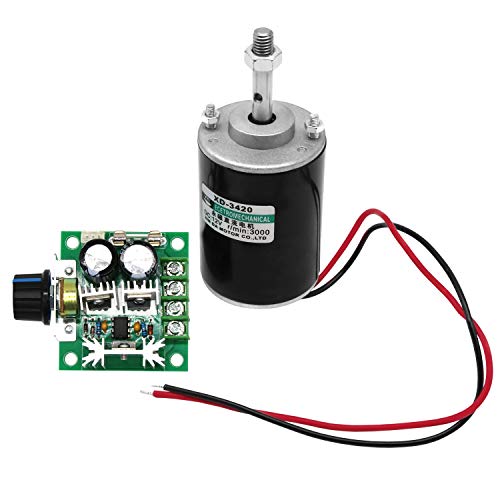
This compact permanent magnet DC motor runs at about 3000 rpm and operates at low current (0.5A). It supports CW/CCW rotation, making it suitable for small DIY generators or light-duty drive applications. The design emphasizes efficiency and smooth operation at modest loads, suitable for educational projects or beginner builds.
Who it’s best for: beginners and hobbyists exploring small, safe DIY projects or generator experiments. Why selected: its simple, low-power design and reversible rotation allow straightforward experimentation. Caution: the 30W rating limits its torque and acceleration for heavier go-kart builds.
YIYIBYUS 12V Gear Reduction Motor

The YIYIBYUS motor emphasizes a belt-pulley design to transfer high-speed motor output into usable drive torque for downstream equipment. It runs up to 250W and 2750 rpm, offering a balance of torque and efficiency. The belt-pulley approach helps in achieving smoother speed control and adaptable torque delivery for various chassis configurations.
Who it’s best for: builders seeking a robust torque delivery with a belt-driven approach for go-kart drivetrains. Why selected: consistent power transmission through a belt pulley can improve efficiency and reduce drivetrain wear. Caution: belt wear and alignment must be monitored for long-term reliability.
BRINGSMART 12V Worm Gear Motor

This 12V worm-gear motor is a compact, high-torque option with a self-locking feature. The gear arrangement helps maintain position when power is removed, which can be advantageous for certain go-kart mechanisms like steering actuators or winches. Rated as a tiny turbine-style gearbox, it is well-suited for precise control tasks on smaller builds.
Who it’s best for: projects requiring self-locking behavior and precise stopping capability, such as automated latches or locking mechanisms on a go-kart. Why selected: the worm gear reduces backdriving and improves hold without extra braking components. Caution: worm gear setups can be less efficient at high speeds and may require careful heat management during heavy use.
Buying Guide: Key Considerations For 12V Go-Kart Motors
- Torque vs. speed: Gear reduction increases torque at the expense of top speed. Choose based on cart weight and desired acceleration.
- Drive system compatibility: Confirm sprocket sizes or belt pulley arrangements align with your chain or belt drive and wheel hub setup.
- Voltage and control: Some models support CW/CCW rotation and higher voltages for scaling up. Plan for a compatible controller and battery pack.
- Durability and environment: Look for gear motors with robust housings and corrosion resistance if the kart will be outdoors.
- Self-locking features: Worm-gear designs help keep loads in place when power is off, useful for certain mechanisms but may reduce efficiency.
- Maintenance: Belt drive systems require tension and alignment checks; gear housings may need lubrication over time.
- Electrical safety: Ensure wiring is correct to avoid short circuits; use appropriate fusing and weatherproofing for outdoor use.
Frequently Asked Questions
- What is the best 12V motor for a beginner go-kart build?
– A motor with a straightforward belt pulley arrangement and accessible sprockets, such as the Bemonoc or YIYIBYUS options, is often best for beginners due to simple installation and reliable torque. - Do I need a gear reducer for go-kart performance?
– Yes, a gear reducer increases torque to move a heavier vehicle from a standstill and improves climb capability, though it lowers top speed. - Can I use a 24V option in a 12V go-kart?
– Some 12V/24V dual-voltage motors (like XD-3420) can operate at 24V for higher speed, but require compatible controls and power system upgrades. - What should I consider about self-locking gears?
– Self-locking gears (worm gear) hold position when power is off, which is useful for specific mechanisms but may add friction and reduce peak efficiency. - How important is motor size for go-kart framing?
– Size and mounting compatibility matter; choose a motor that fits your chassis’ motor mount and allows safe clearance for belts or chains. - Is it okay to mix different motor brands in a go-kart?
– It’s possible but not recommended for drivetrain performance. Consistency in gear ratios and electrical compatibility helps avoid uneven acceleration and complex wiring.