Top-rated 2 trailer balls with a 3/4 shank provide a reliable, standard connection for many two-inch couplers. This guide highlights five practical options, explaining who each is best for and why it’s a solid pick. Use cases range from standard bumper-pull trailers to marine and utility tasks. All selected models share the common 2-inch ball size and 3/4-inch shank diameter, ensuring broad compatibility and straightforward installation.
At-a-Glance: Selected Picks
- Name: CURT 40003 Chrome Trailer Hitch Ball; Capacity: 3,500 lbs; Shank: 3/4 x 1-3/4 in.
- Name: BIG RED ATRLY3120R Torin 2″ Trailer Hitch Ball; Capacity: 3,500 lbs; Shank: 3/4 x 1-3/4 in.
- Name: CURT 40073 Chrome Trailer Hitch Ball; Capacity: 3,500 lbs; Shank: 3/4 x 3 in.
- Name: Better Boat 2 Inch Trailer Ball Hitch; Capacity: 2,000 lbs; Shank: 3/4 in.; Length: 2 in.
- Name: ATRLY2019D Torin Trailer Hitch Ball; Capacity: 3,500 lbs; Shank: 3/4 x 1-3/4 in.
CURT 40003 Chrome Trailer Hitch Ball
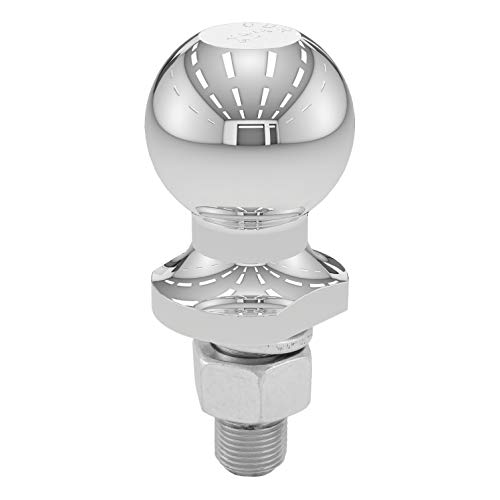
Best for standardized towing with strong chrome protection. This CURT hitch ball is rated for up to 3,500 pounds gross trailer weight, offering reliable towing strength through hot-forged steel construction. The 2-inch ball fits most two-inch couplers, while the 3/4-inch diameter shank measures 1-3/4 inches for secure mounting. The chrome plating adds corrosion resistance for outdoor use and challenging weather. Choose this if you want a durable, straightforward chrome option with widely compatible sizing. A potential drawback is that longer-term exposure to harsh elements may still require periodic inspection.
BIG RED ATRLY3120R Torin 2″ Trailer Hitch Ball
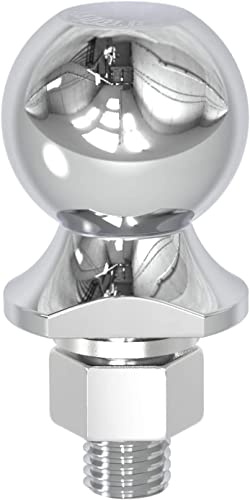
Best for budget-conscious buyers needing standard 2-inch hitch balls. This Torin model uses hot-forged steel for towing strength, with a 2-inch diameter ball and a 3/4-inch diameter shank measuring 1-3/4 inches. The chrome finish offers corrosion resistance for long-lasting use in varied environments, including salt and dirt exposure. It’s well-suited for casual trailers and DIY projects. A limitation is that it targets value-driven buyers, so premium features or coatings beyond chrome may not be present.
CURT 40073 Chrome Trailer Hitch Ball

Best for demanding standard-use towing with longer shank options. This CURT model shares the same 2-inch ball diameter and 3/4-inch shank, but features a 3-inch shank length for enhanced mounting stability and alignment in certain ball mounts. The hot-forged steel construction and chrome finish deliver reliable strength and corrosion resistance. Choose this if your hitch setup benefits from a longer shank to improve clearance or mounting versatility. A potential downside is the longer shank may interfere with shallow receivers in tight spaces.
Better Boat 2 Inch Trailer Ball Hitch

Best for marine and salt-water environments where corrosion resistance matters. This 2-inch hitch ball supports up to 2,000 pounds gross trailer weight and uses a 3/4-inch shank with a 2-inch threaded shank length to ensure a tight fit. The carbon steel base with black nickel coating provides marine-grade durability against salt, snow, and rain. Opt for this if you regularly tow boats or use trailers in damp conditions. A brief caveat is the lower weight rating compared to many 3,500-pound models.
ATRLY2019D Torin Trailer Hitch Ball

Best for mid-range towing with solid heat-treated steel. This 2-inch ball has a 3/4 x 1-3/4-inch shank and is rated for 3,500 pounds gross trailer weight. The chrome finish protects against corrosion, and its hot-forged steel provides reliable towing strength. It’s a good choice when you need a standard, widely compatible hitch ball with dependable mounting on a variety of ball mounts. A limitation is that it doesn’t feature additional coatings beyond chrome, which may be a factor in extremely harsh environments.
Buying Guide: Key Considerations For 2-Inch Trailer Balls With 3/4-Inch Shanks
- Weight rating compatibility: Ensure the hitch ball’sGross Vehicle Weight Rating (GVWR) matches or exceeds your trailer’s gross trailer weight to avoid overloading the hitch.
- Shank length: A longer shank increases mounting stability and alignment in some ball mounts; shorter shanks fit tighter spaces but may require precise alignment.
- Shank diameter: A 3/4-inch shank is the standard size for many universal mounts; verify your hitch mount accepts this diameter.
- Material and finish: Chrome plating provides corrosion resistance; hot-forged steel offers strength. Marine or salt-prone environments benefit from additional protective coatings.
- Ball diameter compatibility: A 2-inch ball is the common size for many trailers; confirm your trailer coupler is rated and sized for 2 inches.
- Mounting hardware: Some products emphasize secure installation with locking washers or nuts. Check whether included hardware matches your installation needs.
- Longevity considerations: For frequent towing, prioritize higher-capacity and corrosion-resistant options to reduce maintenance.
Frequently Asked Questions
- What does the 3/4 shank refer to?
– It refers to the diameter of the mounting shank that goes into the receiver or ball mount; 3/4 inch is a common standard size for many hitch setups. - Is a longer shank always better?
– Not always. A longer shank can improve mounting stability in some mounts, but may not fit in tight spaces. Check your hitch clearance before buying. - Can I mix and match brands?
– Yes, as long as the ball diameter, shank diameter, and weight rating match your trailer and mount, you can mix brands for cost or availability advantages. - Should I prefer chrome over other finishes?
– Chrome finish offers good corrosion resistance for general outdoor use; marine environments may benefit from additional protective coatings. - What is the importance of the shank length?
– Shank length affects how securely the ball sits in the mount and how it aligns with the coupler; incorrect length can affect towing stability. - Do these balls fit all 2-inch couplers?
– Most 2-inch hitch balls fit standard 2-inch couplers, but always confirm the specific coupler’s compatibility with the ball’s shank and mounting nut size.