Answer: If you’re looking to improve engine protection and cabin air quality, these car airflow filters offer better filtration, easier installation, and longer replacement intervals for a wide range of vehicles. The top picks below are best for everyday drivers prioritizing engine protection, better airflow, and cleaner cabin air. Each product highlights who it’s best for and why it stands out, plus practical cautions where relevant. A quick product table follows to help you compare at a glance.
| Product | Best For | Why It Stands Out | Limitations |
|---|---|---|---|
| EPAuto GP943 Engine Air Filter | Hyundai/Kia owners with modern SUVs | OEM-grade fit, tight seal, protects engine from dirt and debris | Designed for select models; verify fitment |
| EPAuto GP042 Engine Air Filter | Honda Odyssey owners (2011–2017) | Rigid panel helps with airflow and engine protection | Specific to CA11042 replacement |
| Ryvclim Engine Air Filter & Cabin Filter Combo | Nissan Sentra 2.0L (2020–2026) owners | Combo kit simplifies replacement; includes removal tool | Combo fits particular models; check compatibility |
| EPAuto GP477 Engine Air Filter | Honda Accord V6 and Acura TLX V6 owners | Rigid panel design; OEM-style fit | Model-specific compatibility |
| EPAuto GP344 Engine Air Filter | Honda CR-V (2007–2009) owners | Improved airflow and fuel efficiency; OEM-quality | Older CR-V generations only |
EPAuto GP943 Engine Air Filter

This filter is designed for Hyundai and Kia vehicles, including Santa Fe, Palisade, Sorento, Sedona, and Telluride models in specific years. It provides an OEM-grade replacement with a factory-style fit and tight sealing, helping protect engine components by capturing dirt, dust, and particles. Best for: drivers with Hyundai/Kia SUVs seeking a straightforward, drop-in engine protection solution. Caution: verify compatibility with your exact model and year before purchasing.
EPAuto GP042 Engine Air Filter

This filter is the CA11042 replacement option for Honda Odyssey (2011–2017). It aims to improve airflow and engine protection by filtering out dirt, dust, and debris. Best for: Odyssey owners seeking an affordable, OEM-style replacement that aligns with Honda’s original part guidelines. Caution: replacement interval is typically around 12,000 miles; confirm maintenance schedule with your vehicle manual.
Ryvclim Engine Air Filter & Cabin Filter Combo

This combo kit covers both engine and cabin filtration for Nissan Sentra 2.0L models (2020–2026). It includes a HEPA cabin filtration element for cleaner cabin air and an easy-install removal tool for tight spaces. Best for: drivers who want a single-pack solution for both engine protection and cabin air quality. Caution: double-check the Sentra year and engine type to ensure full compatibility.
EPAuto GP477 Engine Air Filter
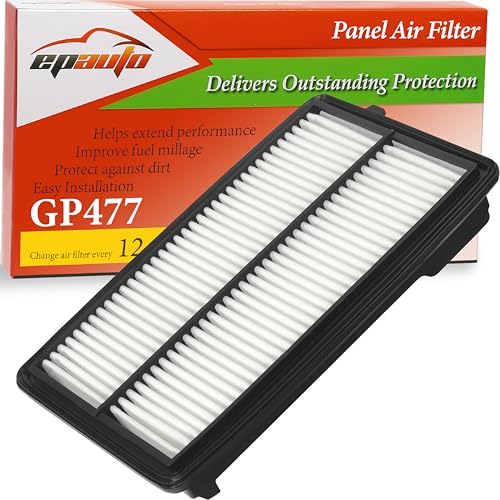
This filter targets Honda Accord V6 (2013–2017) and Acura TLX V6 (2015–2020). It offers an OEM-style design and is compatible with FRAM CA11477; it’s intended to provide improved airflow and fuel efficiency. Best for: owners of late-model V6 Hondas and Acuras seeking a reliable, direct replacement. Caution: ensure precise model-year fit due to engine configuration differences.
EPAuto GP344 Engine Air Filter

Designed for Honda CR-V (2007–2009), this rigid panel filter is built to improve airflow and fuel efficiency, supporting consistent throttle response and engine protection. Best for: CR-V owners seeking reliable replacement for older generations. Caution: not suitable for newer CR-V models or other Honda platforms outside the listed years.
EPAuto GP898 Engine Air Filter

Intended for Mazda non-SkyActiv engines in Mazda3, Mazda5, and related models, this rigid panel filter aims to improve airflow and engine efficiency. Best for: Mazda owners with non-SkyActiv engines seeking a straightforward OEM-style replacement. Caution: not compatible with SkyActiv engines; verify your engine type before purchase.
Spearhead HEPA Breathe Easy Cabin Filter

This cabin filter offers HEPA-level filtration up to 99.97% for particles as small as 0.3 microns, with higher air permeability to maintain airflow. Best for: drivers seeking high-efficiency cabin filtration across a broad range of vehicles. Caution: designed for multiple models; verify exact fit for your car year and trim.
WIX 24483XP Cabin Air Filter

This WIX XP cabin filter features a triple-layer filtration with activated carbon to capture dust, pollen, and odors, improving HVAC performance and cabin comfort. Best for: drivers who want cleaner cabin air and odor reduction. Caution: replacement interval typically around 20,000 miles or annually, depending on driving conditions.
Buying Guide: Key Considerations For Choosing Car Airflow Filters
What should you consider when choosing engine or cabin air filters?
- Vehicle compatibility: Confirm exact make, model, and year. Some filters are model-specific and may not fit outside specified ranges.
- Filter type: Rigid panel versus standard pleated; rigid panels often seal better and support consistent airflow.
- Filtration level: HEPA-type cabin filters offer higher particle capture but should not impede airflow; verify compatibility with your HVAC system.
- Maintenance interval: Replacement intervals vary; follow OEM guidance or filter packaging to maintain performance.
- Installation ease: Some kits include removal tools or are designed for drop-in replacement, reducing install time.
- OEM vs aftermarket: OEM-style parts aim to match factory fit; aftermarket options may vary in seal quality and fitment.
FAQ
- Q: How often should engine air filters be replaced? A: Replacement intervals commonly range from 12,000 to 15,000 miles depending on driving conditions; check your vehicle manual and filter packaging.
- Q: Do cabin air filters really improve air quality? A: Yes, especially HEPA-type filters, which can capture smaller particles and improve overall cabin air quality when paired with a well-functioning HVAC system.
- Q: Can I mix engine and cabin filters from different brands? A: It’s generally best to use filters designed for your vehicle or from the same brand family to ensure fitment and sealing integrity.
- Q: What’s the difference between a rigid panel and a pleated engine filter? A: Rigid panels maintain a fixed structure for a tight seal and durable fit, potentially improving sealing compared with some pleated designs.
- Q: How do I know if a filter is compatible with my car? A: Check the vehicle’s year, make, model, and engine size against the filter’s listed compatibility information in the product description.
- Q: Are premium cabin filters worth the extra cost? A: If you prioritize higher filtration efficiency and better odor control, premium options with activated carbon or HEPA-like media can be beneficial, especially for drivers with allergies or sensitive occupants.